My friend Mike and I successfully completed a Grand Canyon Rim-to-River hike in September, 2025. That story is linked here. What follows is my amateur review of pretty much everything I carried into the Grand Canyon on that Rim-to-River hike. Many of my choices I learned either from others on the Grand Canyon R2R Facebook page or Mike, and the rest I made up – some good, some not so good. I started with the most important to the least important, got sidetracked by head-to-toe clothing, and lost my way with gadgets and fuel. Regardless, Mike and I spent a lot of time on training hikes (and over beers after training hikes, and over beers on days when we did no hiking at all) swapping ideas on what we thought to be critical stuff as opposed to optional, and what you could live with if you got it wrong in the canyon and what we abolutely had to get right. I will try to keep that in mind as I cover the cool and not-so-cool stuff below.
(Legal Disclaimer – These are unofficial product endorsements for the stuff I liked, and I’m not earning a nickel on this. But if any manufacturers want to send me wads of cash to offset this hiking extravaganza, I’m for hire!)
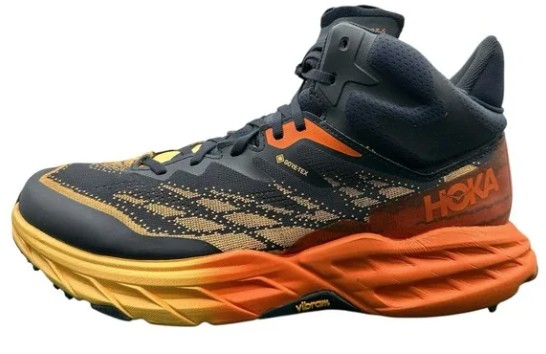
Hoka Speedgoat 5 GTX Shoes. First and foremost were the feet. The right footwear is an absolute must. On the Facebook R2R page, I learned hiking boots are overkill (and heavy), but running shoes are inadequate. Social media channeled me to either Hoka Speedgoats or Altras. I’ve run long distances in Hokas and went with them. I needed ankle support, wanted high-tops, and had to go with the Speedgoat GTX (Gore-Tex) shoes. I consulted with REI, and their shoe guy told me Gore-Tex would be a mistake – my feet would sweat and I’d be miserable. Great guy. Bad advice. Wore them in hot and cold weather, and they were perfect. (And colorful!) Bought these in the spring of 2025 when the choices were Speedgoat 5’s as new old stock, or Speedgoat 6’s – the latest. The 6’s were well over $150, and I found the 5’s at Nordstrom Rack online for $115. I was all in on the 5’s. Sizing was a challenge—I’m a 12 and needed a 13 to fit comfortably—generous toe box and nary a blister. I learned that by ordering non-returnable low-cut Speedgoats in a 12 on eBay for $85. I sold them to Mike, and that’s what he wore into the canyon. I’m not finding Speedgoat 5 GTX’s online at this price anymore, or I’d buy another pair or two.
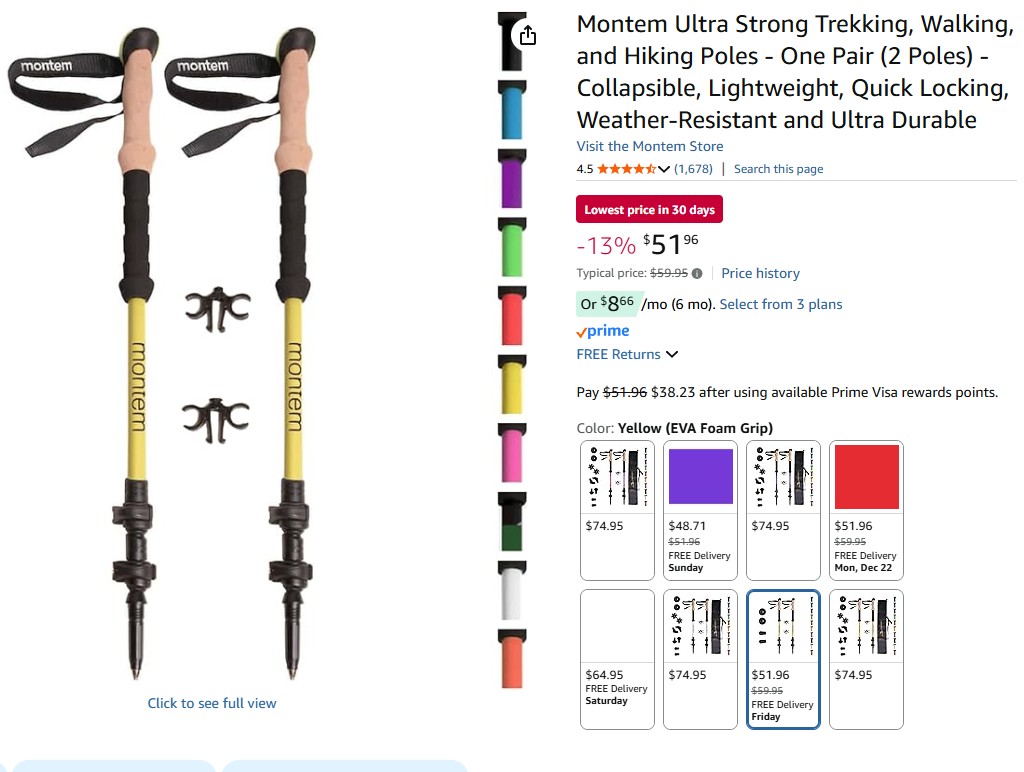
Montem Trekking Poles. For my 62nd birthday, I hiked up Old Rag in the Shenandoah Mountains alone and used trekking poles for the first time. From Walmart. They broke. I returned them. Lots of opinions on poles on social media, and these Montems got great reviews. They were affordable. And come in yellow, my favorite sunshine color. Mine have a cork grip. Very light. Learned from Mike how to use them properly, and I value them more than oxygen, I think. Pretty sure I could stab a bear with them if I needed to. Reasonably priced. Amazon says, “Crafted out of Aluminum 7075 – the same material used to build airplanes.” That sounds like bullshit. They were strong enough to support my 220 lbs.
Speaking of airplanes, Mike and I flew from Virginia to Phoenix for this hike and took as much of our critical gear as possible in our carry-on bags, but checked our poles in our suitcase. I’ve seen debates on whether you can carry them on a plane, but we didn’t want to try. The decision tree was simple – if our checked luggage got lost, there’s a whole bunch of stuff we could go to Walmart or REI in Arizona and replace just fine. But anything we’d be uncomfortable buying upon arrival and using for the first time, like our hiking shoes, meds, hiking clothing, and so on, went in our carry-on bag. It worked.
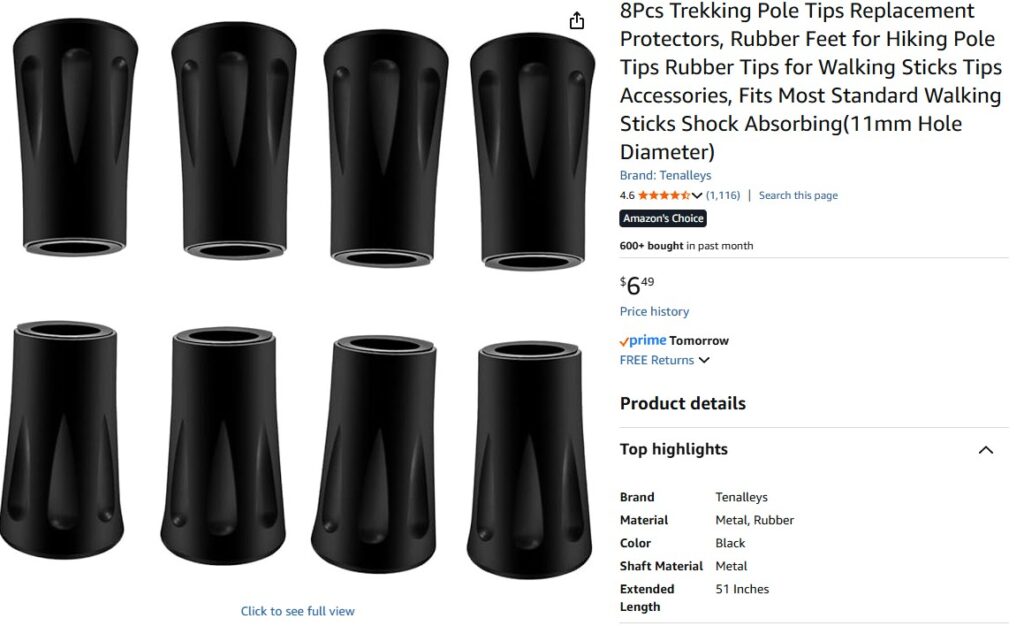
Extra Hiking Pole Tips. During training, I wore through the Montem’s tips and had to replace them. Mike lost a tip on a hike, and we both agree the racket of the carbide tips on rocks can drive you crazy on a long hike. Bought me an eight-pack, took an extra pair in the canyon, and yet these replacement tips have yet to wear out. A bargain. Buy some. Your ears (and hiking buddies) will thank you.
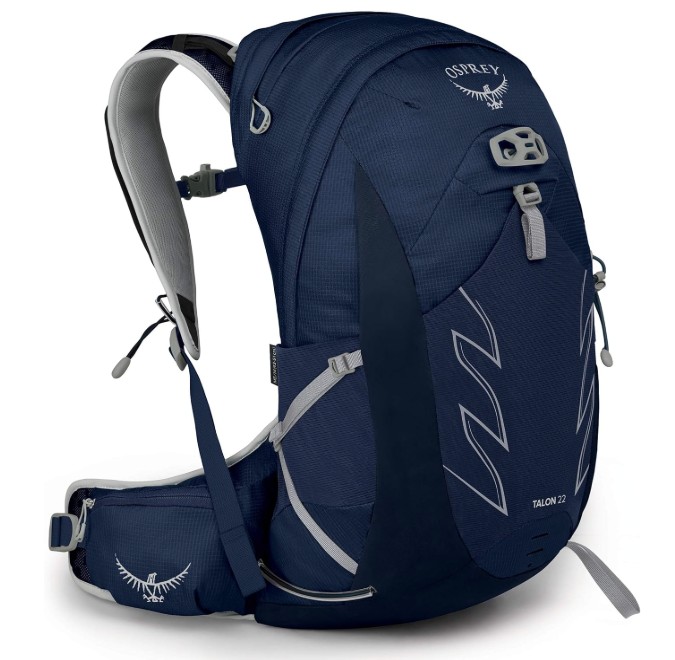
Osprey Talon 22 Liter Pack. Way up high on the list, and all the time on your back, is the right pack. There are lots of choices. I chose this one because so many people loved it on Facebook, and I found it at REI for only $119. It’s regularly priced at $170. I tried it on at the REI store, and it was fine. I loved the padded waist belt and its pockets. I wasn’t a fan of only two cargo pockets – a main compartment and a smaller one above. I would have preferred many smaller pockets to segregate my stuff and make it easier to find. Instead, I had to create my own, admittedly clever, system I’ll share below. Neither of the water bottle pockets on the sides was reachable without taking the pack off, so I invested in a water bottle holder for the chest strap, an idea stolen from Mike. Despite my criticism, the Osprey performed admirably, and when I see it hanging in my garage, with Bright Angel Trail dirt still dusting its bottom, I give it a thumbs up and smile. It ain’t heavy. It’s my brother.
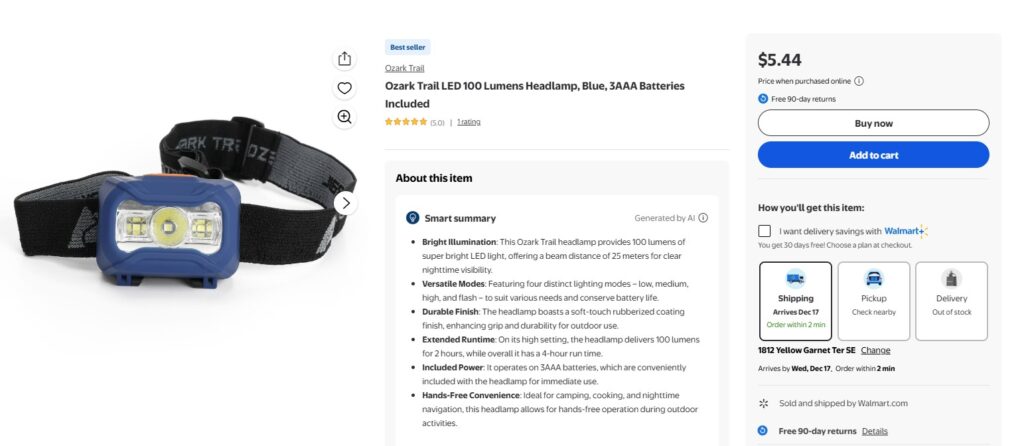
Ozark Headlamp. Granted, we only needed light for about two hours in the morning, and would need light if the hike went long (after dark) or we ran into trouble and had to overnight. So I brought two cheap, lightweight headlamps – one that ran on batteries alone (and brought extra batteries) and one that was rechargeable via USB cable to my battery pack. And my cell phone flashlight. Lots of recommendations on the hiking Facebook groups, ranging from “go cheap at Walmart – mine has never failed” to “this is no place to scrimp.” I was comfortable with my choice. And my backup plans.
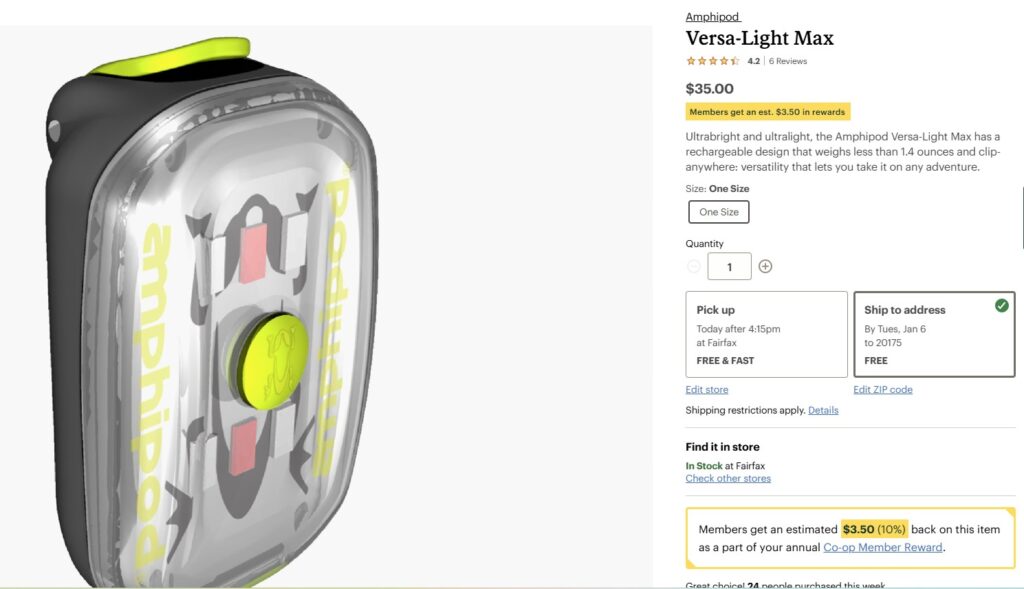
I joined REI to get a discount on my Osprey backpack, and that came with a $30 gift card good for 90 days, I think. I panicked near the end and bought this clip-on light. Facebook hikers liked the idea of clipping a light to their waist or chest strap to illuminate the path and let them turn their head and talk to hikers without blinding them with a headlamp. I tested it before leaving home, and it was astonishingly bright. Rechargeable on my battery pack if need be, although it allegedly lasts for light-years! Really impressed by this, but only brought it as a backup. Never used it. The Walmart headlamp was all I needed. But two is one, and one is none……
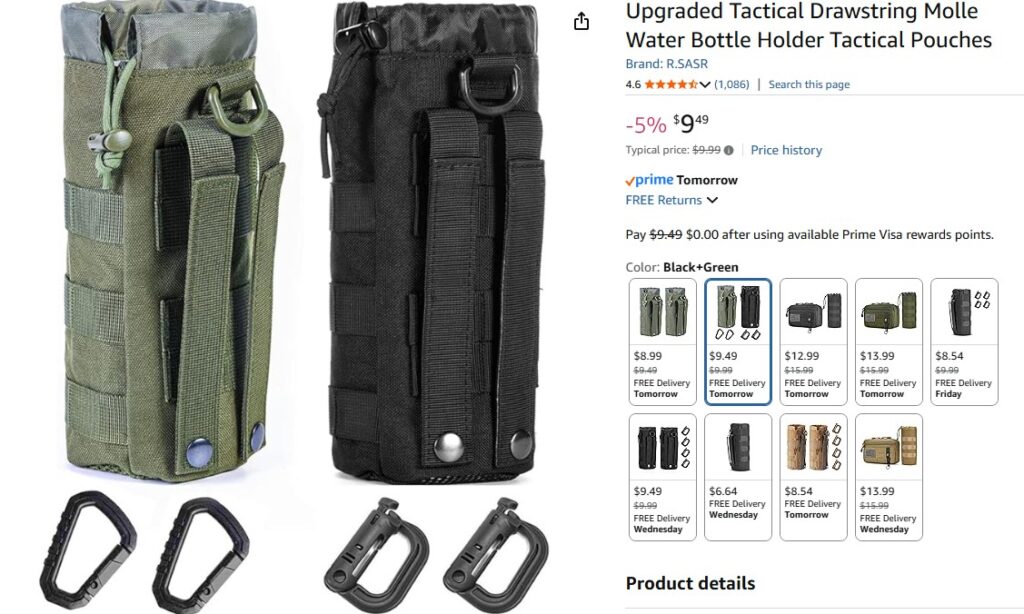
Water Bottle Holders. I bought the pack of two because, if you haven’t read between the many lines above, I’m cheap. But as I learned from the far more manly Navy SEALS, “Two is one, and one is none.” After a few months of training, the first bottle holder started tearing at the seam, and I took the second into the canyon, and it was just right. Used the carabiner to secure the bottom of the holder to my chest strap of the Osprey. No idea what those other D rings do. There were no instructions. So much easier to access the bottle from the chest strap, and I rotated full bottles from the side pockets to the chest along the way.
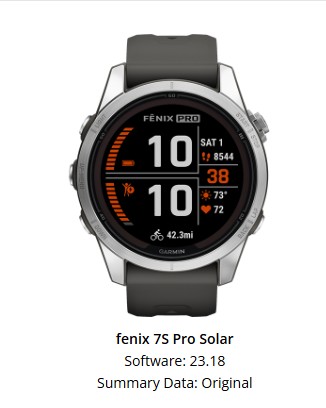
Garmin fenix 7S Pro Solar GPS Watch. The third biggest expenditure of the trip, I think.* I started running in 1981, and my logs go back that far. If a run isn’t documented, it didn’t happen. Same with hiking. In addition to capturing fascinating, highly complex data about my plodding adventures, unlike running, hiking goes better when you don’t get wildly lost. The navigation and mapping features on the Garmin were top-notch. There are lots of other choices. I’ve been using Garmin since 2007, and all my data, running, hiking, biking, and even long walks, are in their app – Garmin Connect. Mike taught me to use the AllTrails app and download maps to my watch. Incredibly helpful, especially when I ventured out on solo training hikes.
I went a little nuts and dropped $560 on a refurbished and warrantied model from Amazon. The solar charging sounded neat, but I never really used it. Turns out that if you leave the map running on the main screen, the battery drains faster than the solar recharging can replenish it. But it has a 14-day battery life, SOS function, and lots of other geewhiz stuff I never used. I’ve seen some debates on the accuracy and reliability of GPS watches in the canyon. Mine was superb.
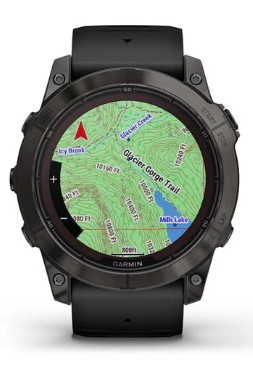
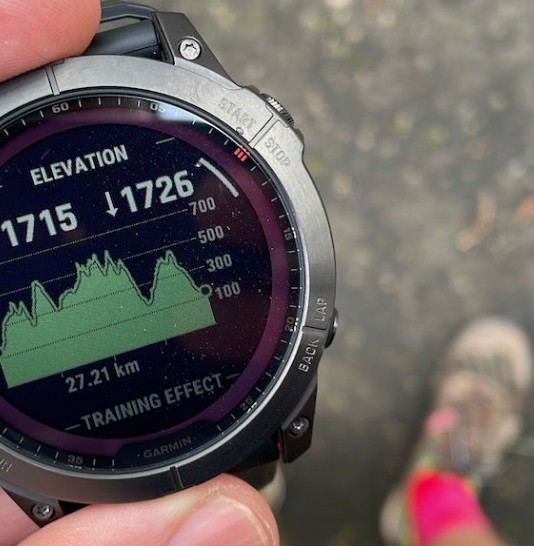
Mike taught me about the live tracking feature, which shares a ton of data and location in real time with whoever you choose to sign up on Garmin Connect. Great feature, although it works by linking your watch to your phone via BlueTooth, and the reporting goes from your phone to the world via cellular signal. So my watch collected an enormous amount of information, but with limited signal in the canyon my family got only sporadic reporting. Mike’s rental Garmin inReach tracker did a better job of relaying live information.
* The most expensive part of our trip was first-class airfare from Virginia to Arizona. We told ourselves we’d need that for the return leg when our bodies were broken and weary. Next was hotels. I’m saying the Garmin was third because I’m afraid of the impression I’ll leave if I mention our bar bills.
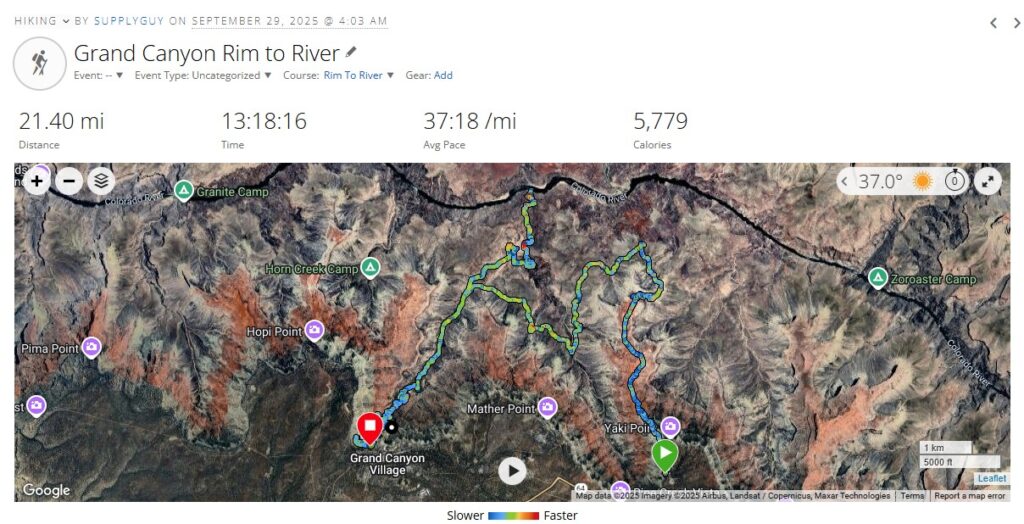
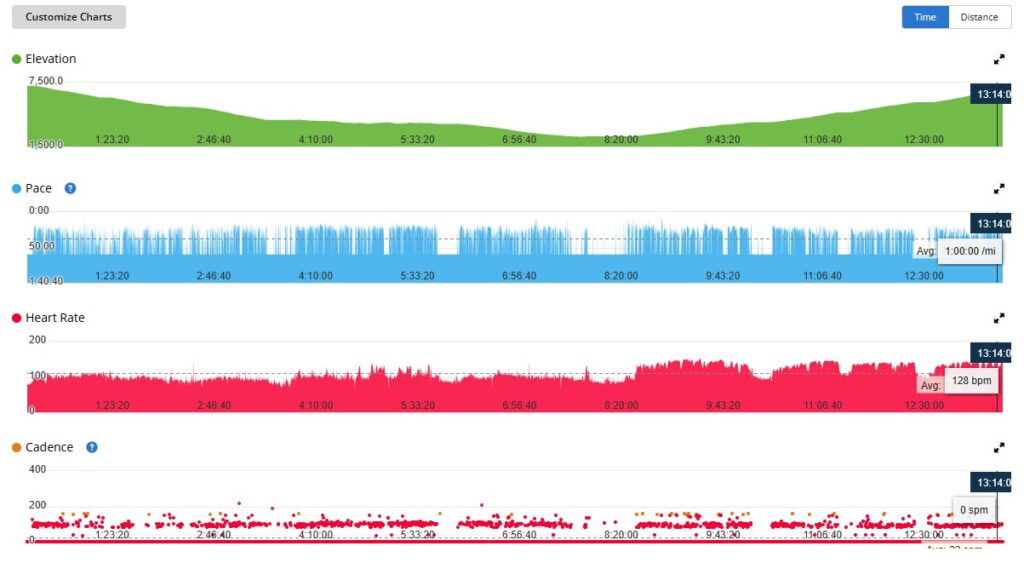
The display above is from Garmin Connect, overlaying our hike on the Grand Canyon map.
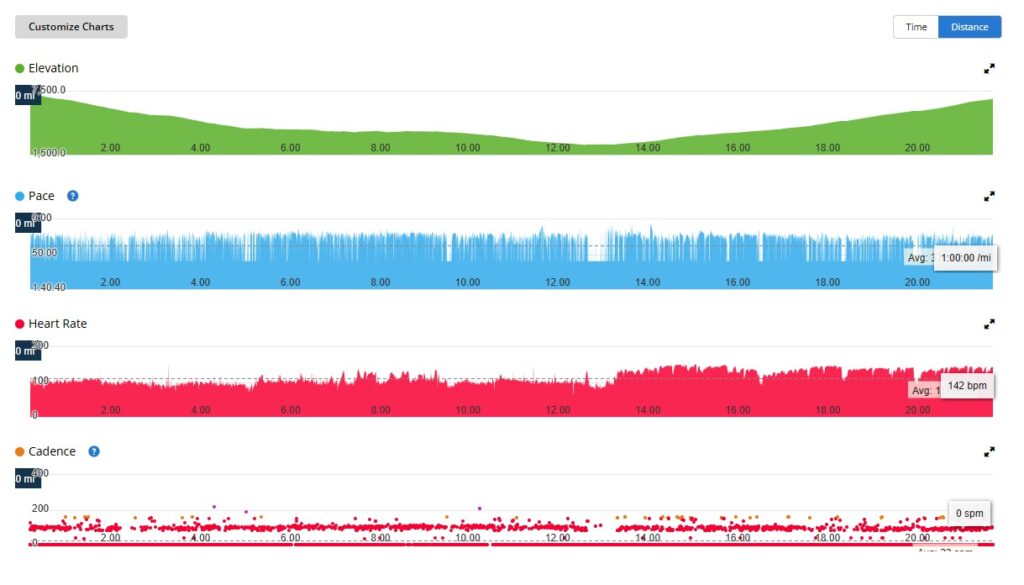
Above and below are just two of the reports from Garmin Connect – same charts but one is by time and one is by distance. My takeaway is the ticker had to work harder coming out, but never spiked in an unhealthy way!
Cool Clothes – Mostly Good Ideas
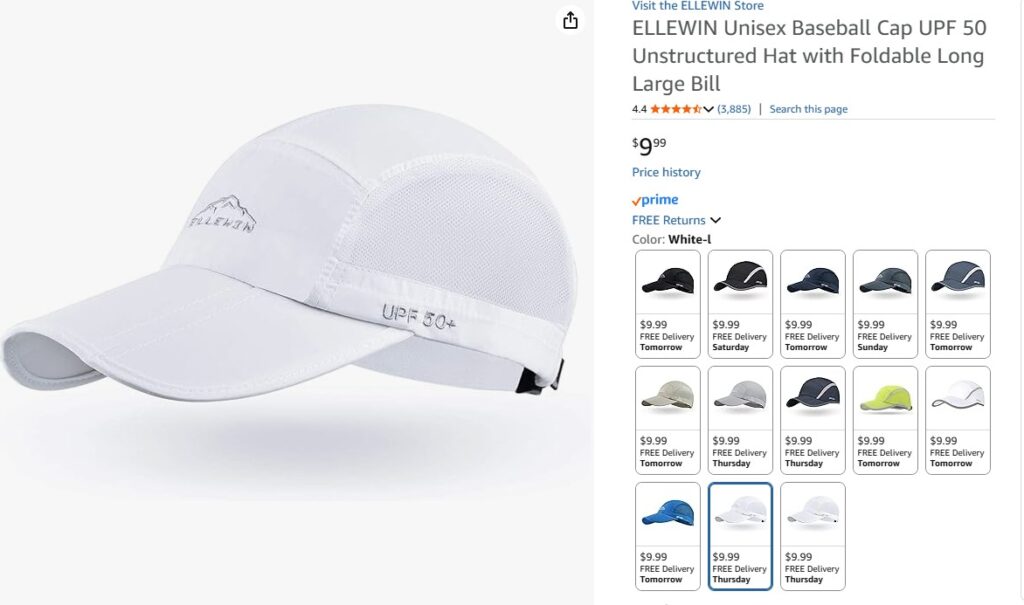
UPF 50 Hat. Starting at the top. For years, I’ve sworn by my adage for hats: Off in the shade and on in the sun (or rain). Take the hat off to dissipate heat and put it on in the sun to cool my noggin. I wear glasses, so it’s also hat on in the rain to keep my lenses clear. Off and on and off and on. Mike introduced me to these tri-bill hats that fold neatly, making it easy to stow them in my waist or chest band when not in use on a hike. UPF is good. Lightweight. Cheap. Making them gifts for my adult kids when they run. I used one of these for all my training hikes but one; the week before, I went for a hike using a “boonie” hat that was a gift long ago, and I loved it. It looks dopey (it’s in all the photos above), but it kept the sun off my neck and eyes.
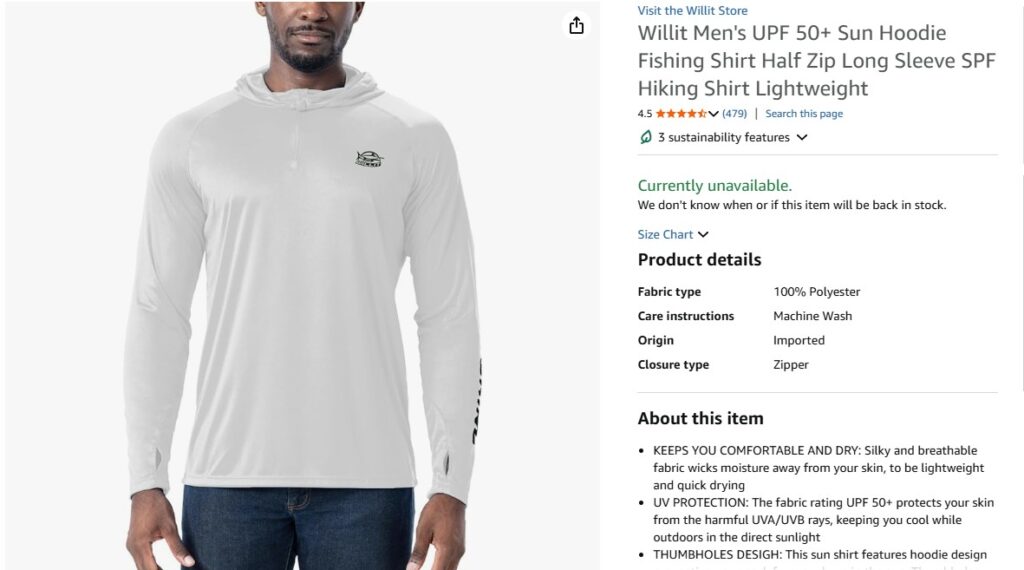
The long-sleeve, UPF, quarter-zip hoodie. Folks swear by high-tech hoodies, and you can see from the photos above that I wore them in training hikes, no matter how silly I looked. Here’s my secret on what made this one special. (It’s not that it’s advertised as a fishing shirt.) Way up top, there’s a shot of my final marathon, and I’m wearing a yellow short-sleeve biking shirt, a quarter-zip. Ran many marathons in biking shirts because they have pockets in the lower back for carrying stuff. The real benefit is the quarter-zip – when things get warm and sticky, being able to unzip and vent has been wonderful. But once Mike taught me the value of long-sleeve hoodies, I had to give up the quarter-zip. Almost no one sells the combo of a hoodie, long sleeve, and quarter-zip…..until I found this one! Paid $9.99 on Amazon. I’ve paid a lot more for long-sleeve hoodies and technical shirts, and can’t tell the difference. Lots of folks like lots of different shirts (and shoes, and socks, and just about everything else), and you can make your own choice to spend or not to spend. You have to be comfortable that you’re properly attired for your hike, and I was. Protected from the sun, no chafing, wicking the sweat away. Oh yeah, not once did I put the hoodie up, I loved my goofy boonie hat that much.
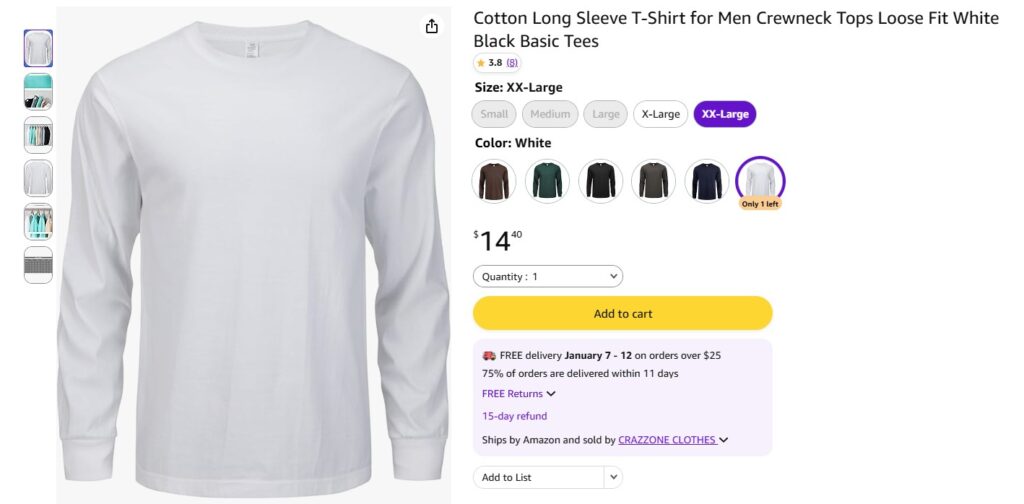
The good old 100% cotton T-shirt. The Facebook crowd crowed about the value of an all-cotton long-sleeve shirt over a wicking shirt for the sole purpose of soaking it in a creek at the bottom of the canyon. Apparently, a cotton shirt will stay wet longer than a high-tech wicking shirt, good for staying cool in the relentless sun. I believed them, although I was not able validate the wet T-shirt contest because we didn’t have anywhere close to the temperatures where this would make sense. Instead, I wore this cheap, long-sleeve T-shirt under my high-tech hoodie to keep me warm in the dark descent down South Kaibab. Took it off when the sun came up and stuffed it in my backpack. It served me well. The shirt was only $9.99 on Amazon Haul (I think that’s their version of Temu?), although it’s more expensive now.
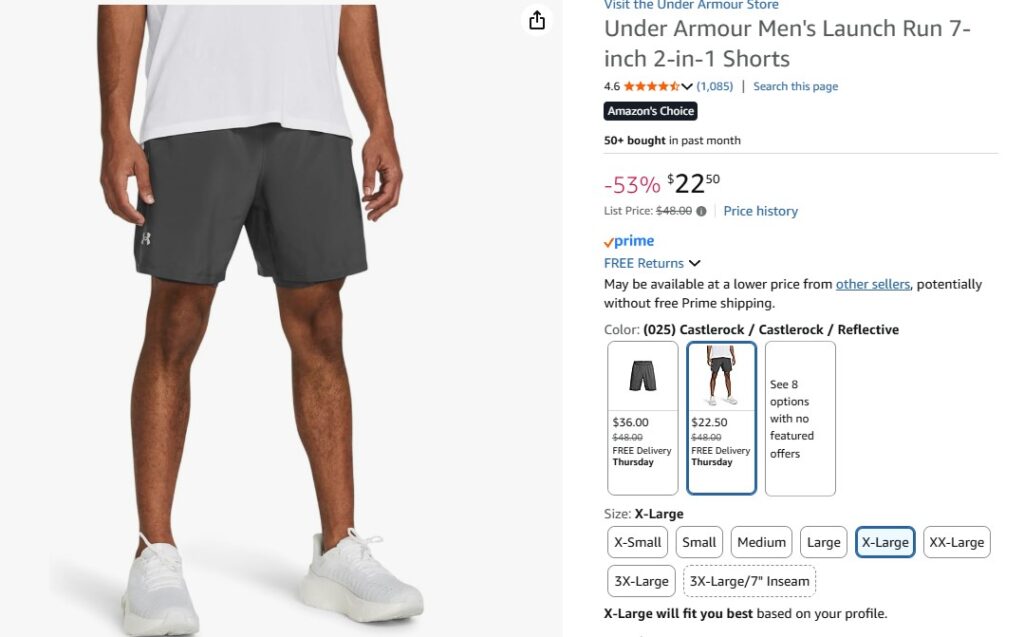
2-in-1 Shorts. Lightweight, wicking, and with the critical compression liner to keep, uh…things in place throughout the day without chafing. Side pockets and a zippered back pocket for stuff I’d need too frequently (like candy and gum) to keep taking off the Osprey pack. Almost all my marathons were run in shorts like these. The downside is they show my chicken-like legs.
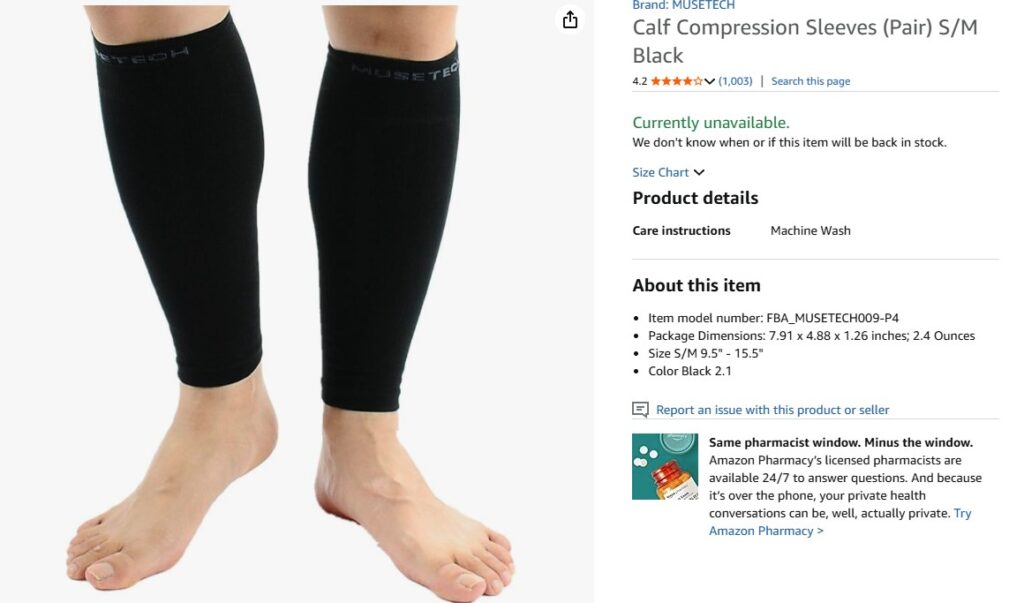
Calf Compression Sleeves. These served a couple of purposes. They increase circulation and keep my calves from cramping, at least in my head, that’s happening. The sleeves also kept my lower legs warm in the predawn chill, allowing me to hike later in shorts and not pants. The plan was to rake them off once it warmed up, although I never got around to it. They were sure hard to unroll over my swollen ankles after the hike! Instead of hiding my chicken legs, they accentuated them. Paid $9.99 for these too. I am one low-budget hiker.
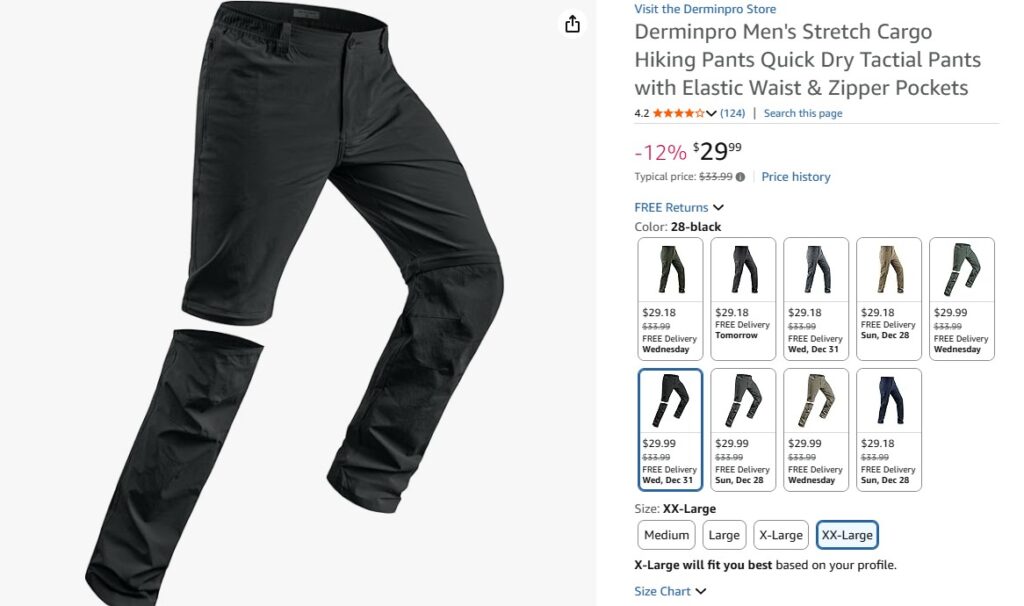
Convertible Pants. Packed them for the trip but left them in the hotel room, choosing shorts instead. Ideally, the best of both worlds – pants when you need ’em and shorts when you don’t. During training hikes, I was pleasantly surprised to find I could slide the unzipped lower legs over my feet without removing my enormous Hoka hiking shoes. That’s a plus when you’re low on energy. While I expected the day to be shorts weather, the main reason I didn’t go with convertible pants is that I’d still need compression-like underwear underneath, irrationally, one extra piece of clothing I’d have to remember to pack. Our contingency plan included the what-if of having to overnight in the canyon if something went wrong, and staying warm. I thought the pants might be the right solution, until I recalled we had other plans for that. Find a secluded spot and spoon? Not the plan, just seeing who’s still reading. The emergency stay warm plan comes later in the emergency stuff section.
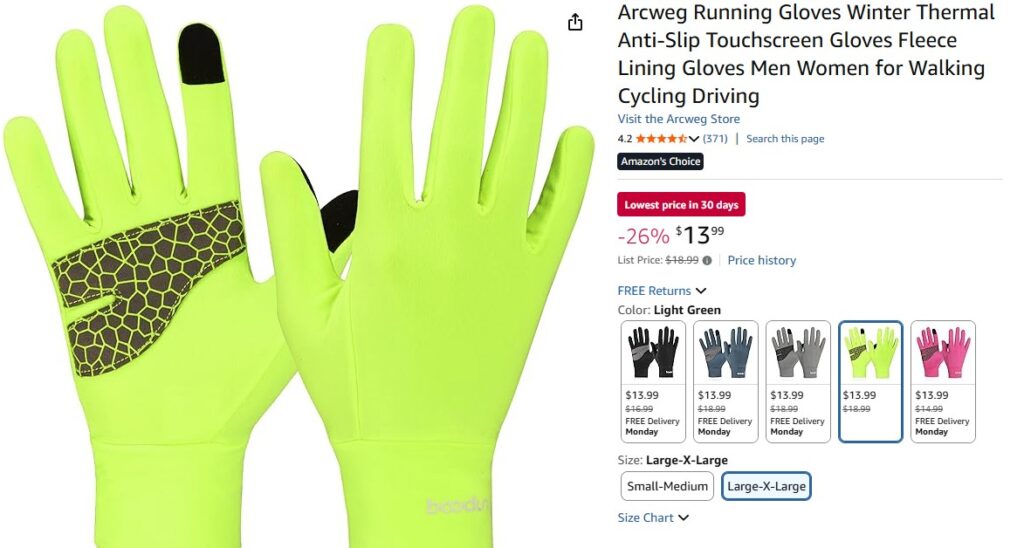
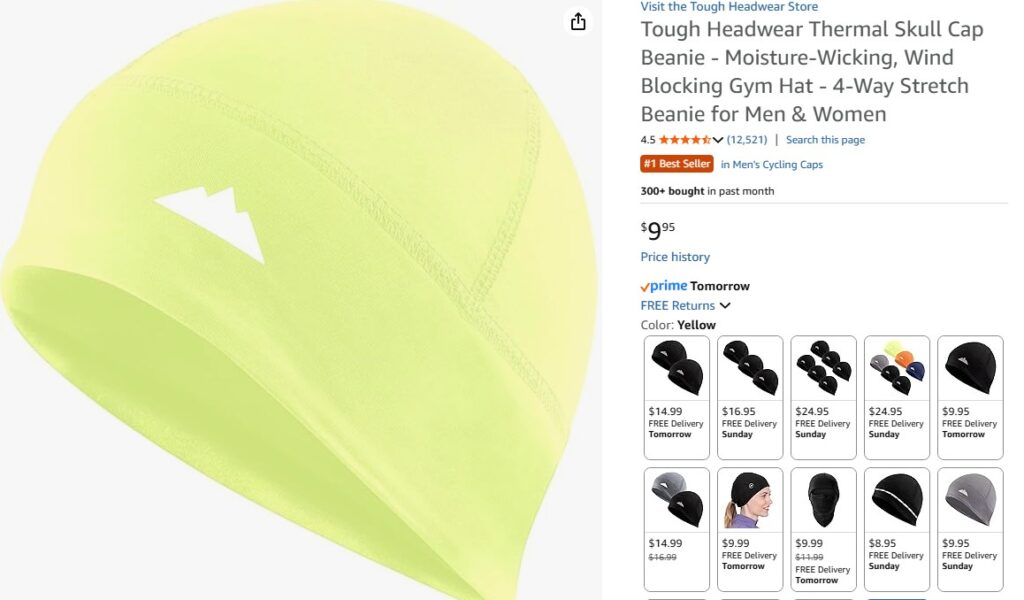
Gloves and a Warm Hat. It was a bit cold in the predawn departure, and gloves and a hat were needed for a bit. About two hours, really. And our contingency planning included the “what if” we had to overnight in the canyon unexpectedly, and a hat and gloves might be needed again. I went with the lightest cold-weather gear possible. Turns out that worked out just fine.
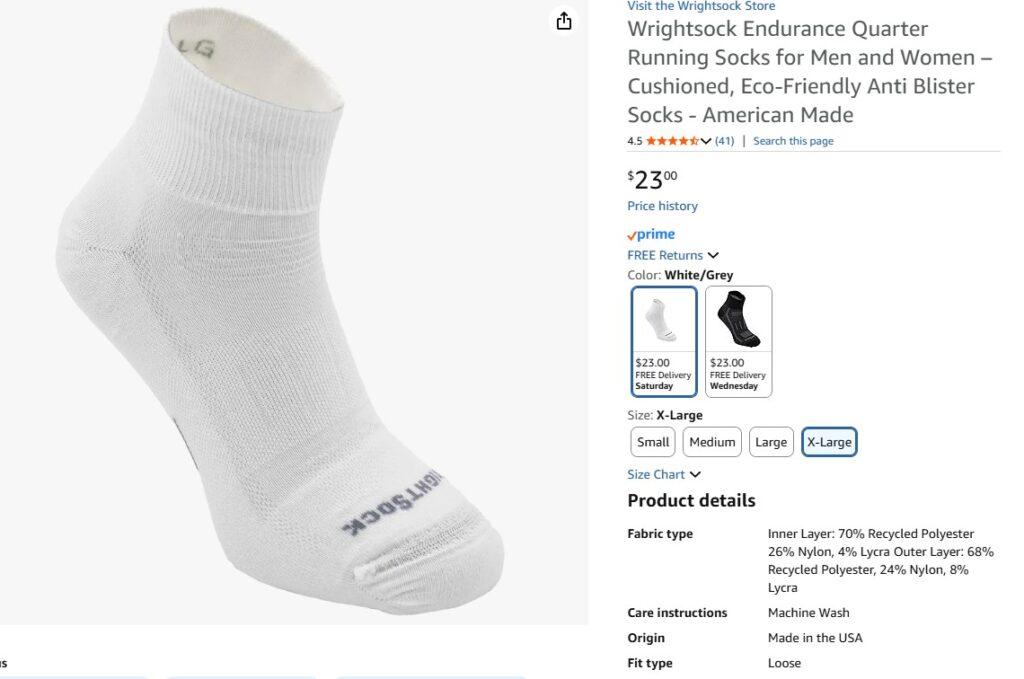
Socks. Again, decades of success running in double-layered Wright socks led me back to these, after trying some highly recommended hiking socks. Blisters are a hiker’s Achilles heel. (That really makes no sense unless the blister is on your heel, but the line was too good not to use.) I have never had a blister, running up to 50 miles or hiking 20+ miles in Wright double-layered socks. That’s why I paid over $20 for these. Go with what you like and trust, though. I trust these. I bought a second pair so I could change after rinsing and cooling my feet in Pipe Creek by the Colorado River. Probably spent more on my socks than all my other clothes combined!
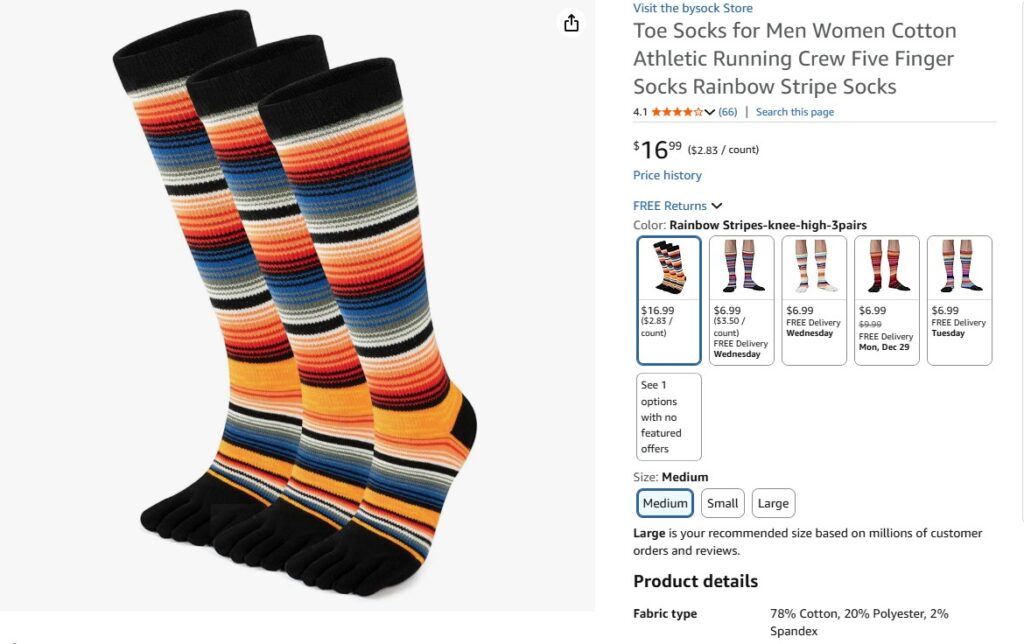
Full disclosure….so many hikers on Facebook gushed about “Toe Socks” that I had to try them. The cheapest I found were these, selling for $8.41 at the time. I bought them and tried them out, much to my wife’s embarrassment, thinking that if they worked for me, I’d get a real pair. Less garish. I was never comfortable with the fabric between my toes, so I abandoned the idea. That said, so many people love them I’d recommend finding a cheap pair for a trial hike, and if you think they’re you buy a reputable pair (not that these aren’t – I get the “you get what you pay for” notion, and $8 socks may be suspect.)
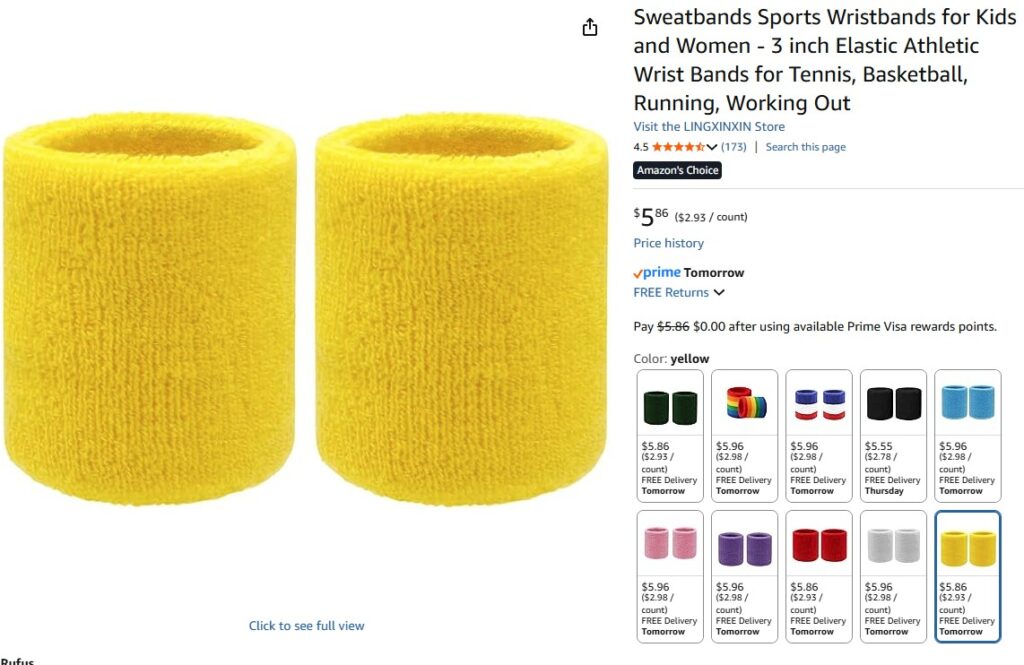
Bargain sweat bands. Planned to mop my sweaty brow from time to time. In my inspirational sunshine yellow. Cheap. Soft. I only wore one on my right hand because I looked at my Garmin watch all the time on my left and didn’t want it hidden. And not visible in any of the pictures because my sleeves were down, and when they were up, I used my right hand for selfies. Ugh. Probably didn’t need these.
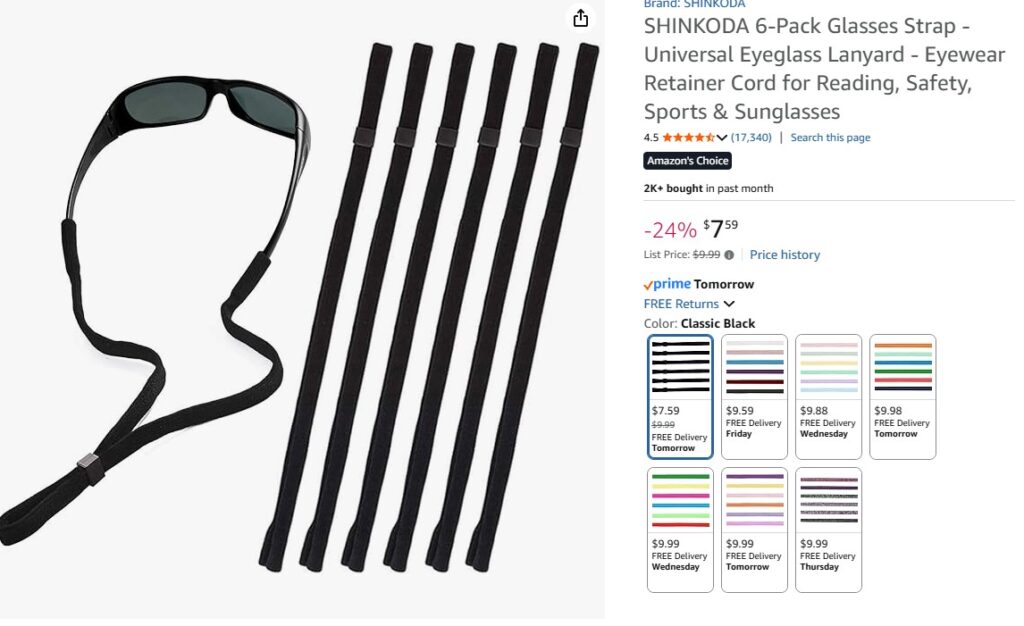
Glasses Strap. I guess these go under clothing? I wear prescription sunglasses, and it would be a problem if they slid off my nose into an abyss. I swear by these eyeglass/sunglass lanyards. I also swear by the multipack. I guarantee you they slither away from gym bags, backpacks, car consoles, and dresser drawers like little snakes. I’ve lost many. If the Navy SEAL saying of “two is one and one is none” on redundancy, six is one for these things.
REFUELING – FOOD, DRINK, AND WHATNOT
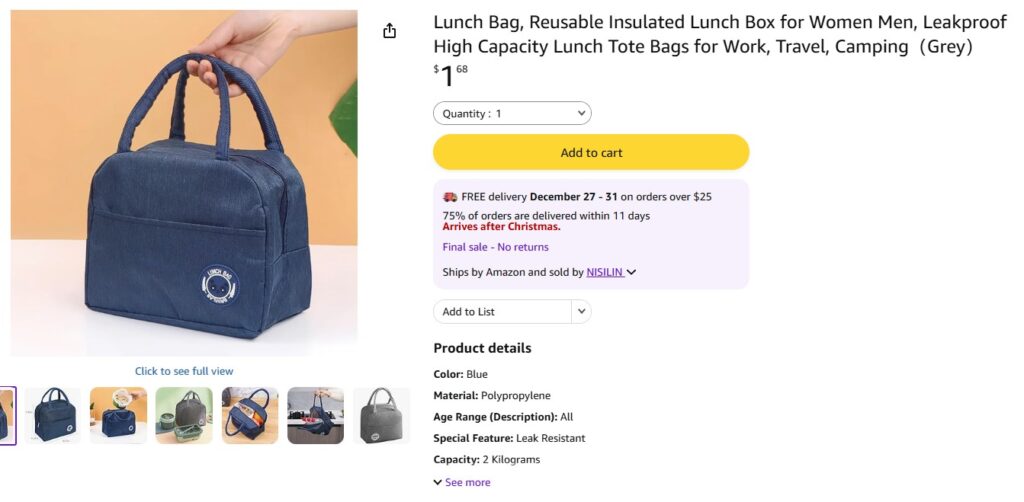
First, the whatnot. My little insulated $1.68 lunch bag is maybe the most bang for the buck of all my gear. On every training hike and in the Grand Canyon, I could count on this bag and a small baggie of ice to keep some drinks, my Uncrustable PB&J’s, and pickles cool for hours. It didn’t take up much room in my pack and weighed at most 8 ounces empty. Every time I reached in for a cool snack I was reminded of how useful this was!
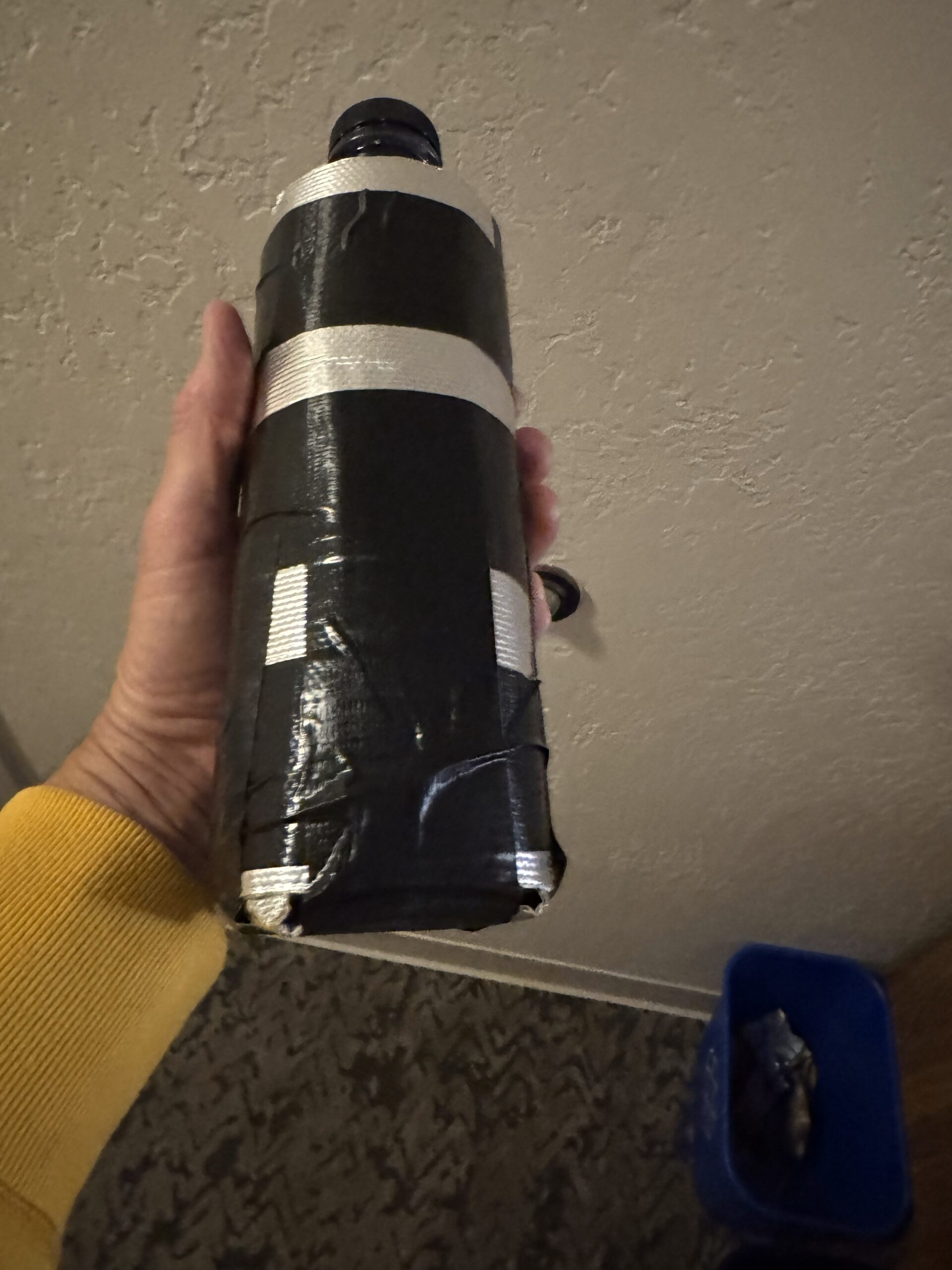
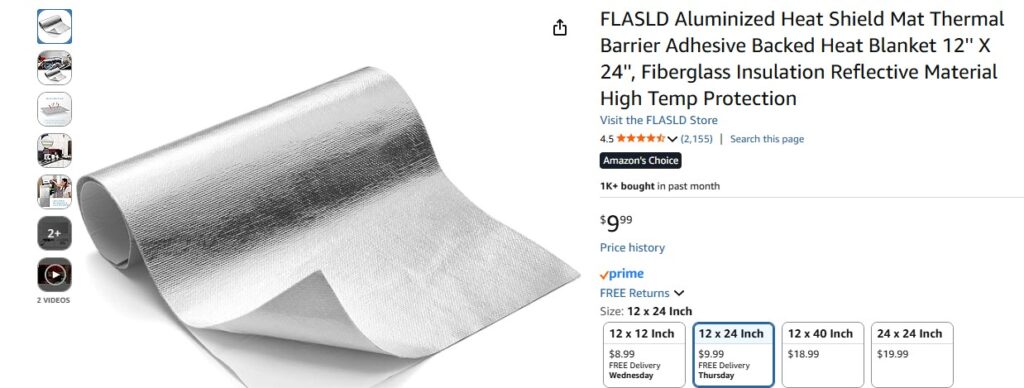
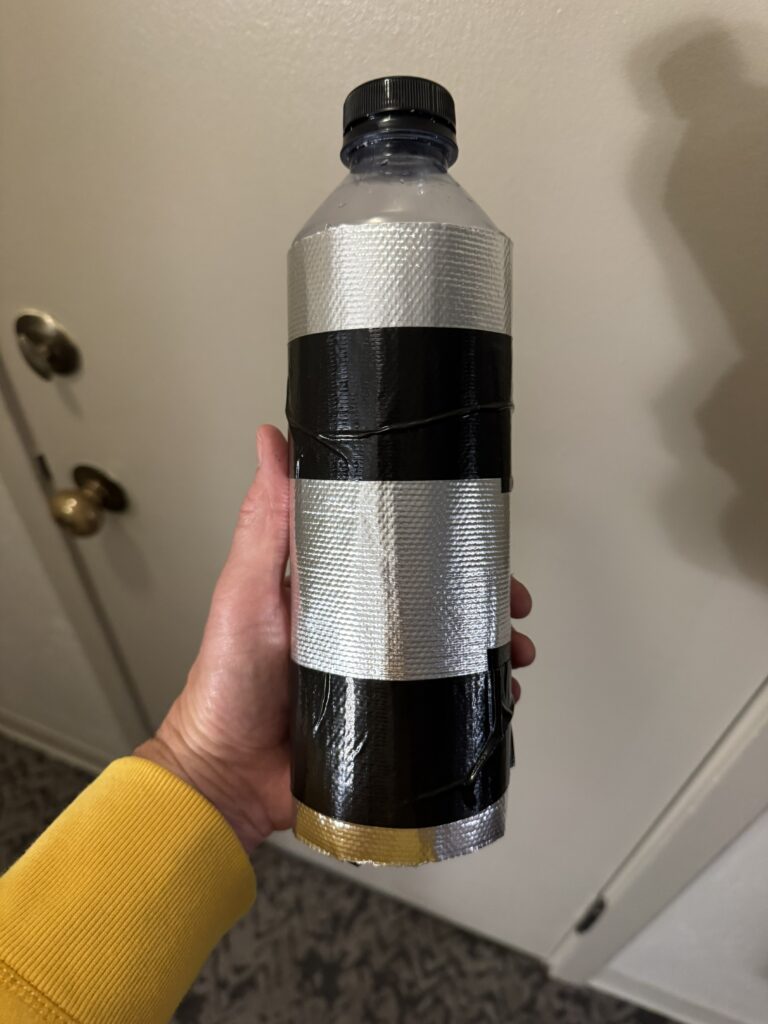
I don’t know what to say about my arts-and-crafts project to make a coozie for my two store-bought water bottles. Hikers on Facebook note that with the unbearable heat in the Grand Canyon, often the water spigots on the way out up Bright Angel have warm, unpleasant water. Filtering water at Pipe Creek is usually much cooler, and I had planned to refill my two one-liter bottles there. How cool (ha!) would it be if I could insulate them?! I once used a sheet of this thermal barrier stuff on the floor of my vintage Fiat to keep the heat out. Would it work to keep the cold in my bottles? I bought a small sheet for $10 and brought it, along with a pair of scissors and some duct tape, to Maswik Lodge.
The day before the Grand Canyon hike, I watched college football and made two coozies. The one on the left above is the ugly prototype, and the one on the right was aesthetically pleasing and went into the canyon with me. A brief hiccup when I worried they wouldn’t slide in and out of the bottle holders on the Osprey pack, but that wasn’t a big problem. I have no idea at all if my homemade coozies cooled my drinks – I mean, the drinks were somewhat cool all day, but that could be due to the lower temperatures overall. I will make these for you for $50 plus shipping if you’re interested.
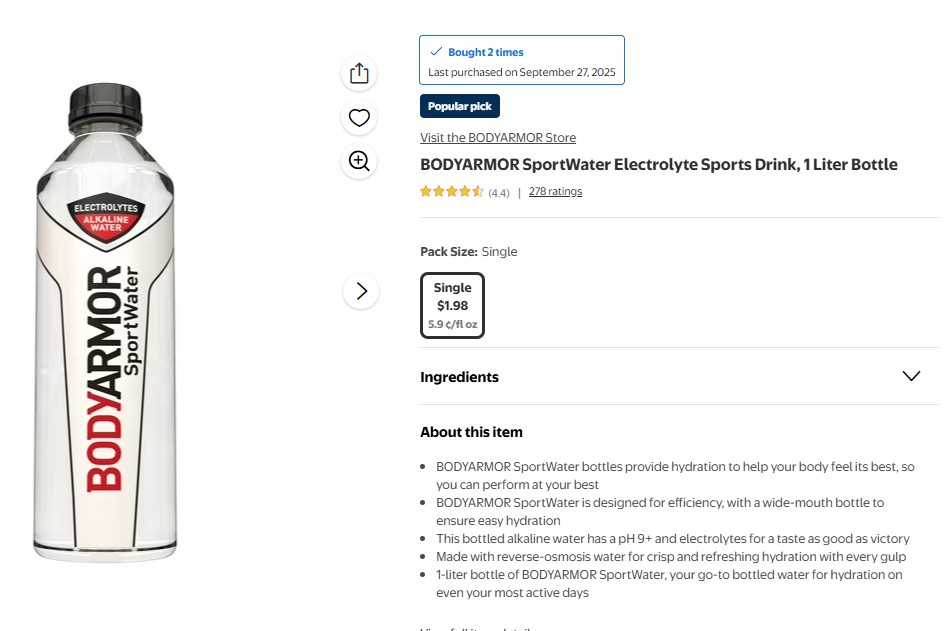
Water Bottles (2). I stumbled on these at Walmart for less than $2 each. Wide mouth and easy to refill. It almost didn’t matter that they contained BodyArmor electrolyte water – I would have paid two bucks just for the bottle! Mike used a drinking tube for a similar bottle that also went with his hydration bladder. It worked for him, although I’ve never been a fan of bladders and tubes. For me, it’s essential to track how much fluid I’m taking in, and that’s nearly impossible, I think, with a bladder unless you take it off and eyeball it. (You think there’d be a high-tech solution for bladders by now – a float sensor inside linked to a phone app?) At one liter each, they fit nicely in the side pockets of the Osprey backpack. That said, I never drank from these bottles – they were simply mules for my fluids to replenish my primary bottle below.
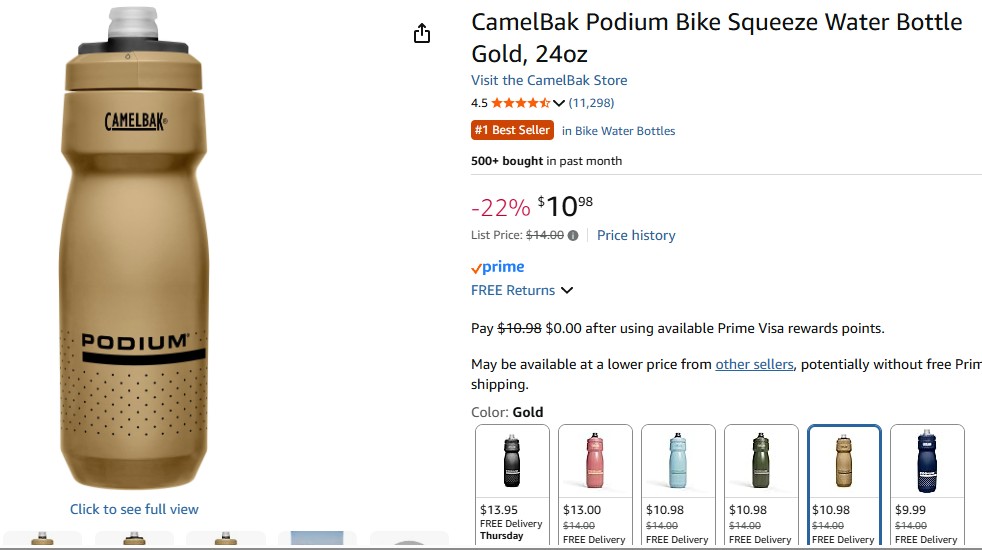
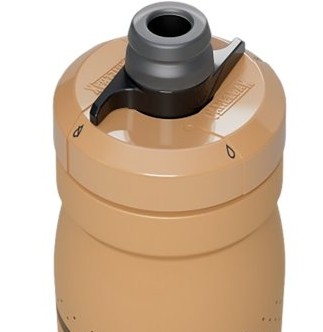
I chose the CamelBak bottle above as my primary drinking container for four reasons. First, at 24 ounces (.7 liters), it fit nicely in the chest strap-mounted bottle holder without getting in the way of my arms or banging into my chin as the one-liter bottles did. Second, you can see in the right picture that it has a neat twist-lock feature for drinking. When I tried regular Gatorade bottles, I’d sometimes fumble the cap while walking and drinking. I worried I’d drop a water bottle cap and punt it over the edge of the canyon, and have to handle an open container the rest of the way. With this one, open the valve and squeeze. (It’s billed as a bottle for bicyclists.) Third, it was cheap at $11! And last, the wide mouth makes it easy to refill.
Drinking.
People say I’ve got a drinkin’ problem
That ain’t no reason to stop
People sayin’ that I’ve hit rock bottom
Just ’cause I’m living on the rocks
It’s a broken-hearted thinkin’ problem
So pull that bottle off the wall
People say I got a drinkin’ problem
But I got no problem drinkin’ at all – Midland.
So What Went In the Bottles?
We know we can’t live by refueling with water alone, and I brought three types of powdered electrolyte drink mix with me.
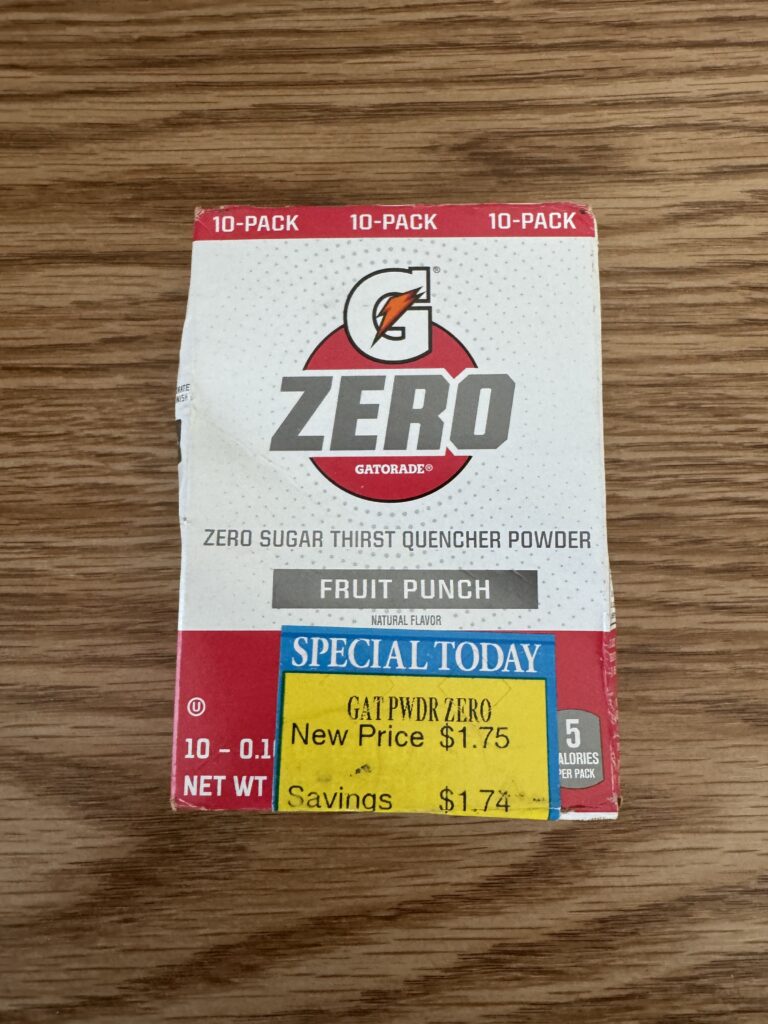
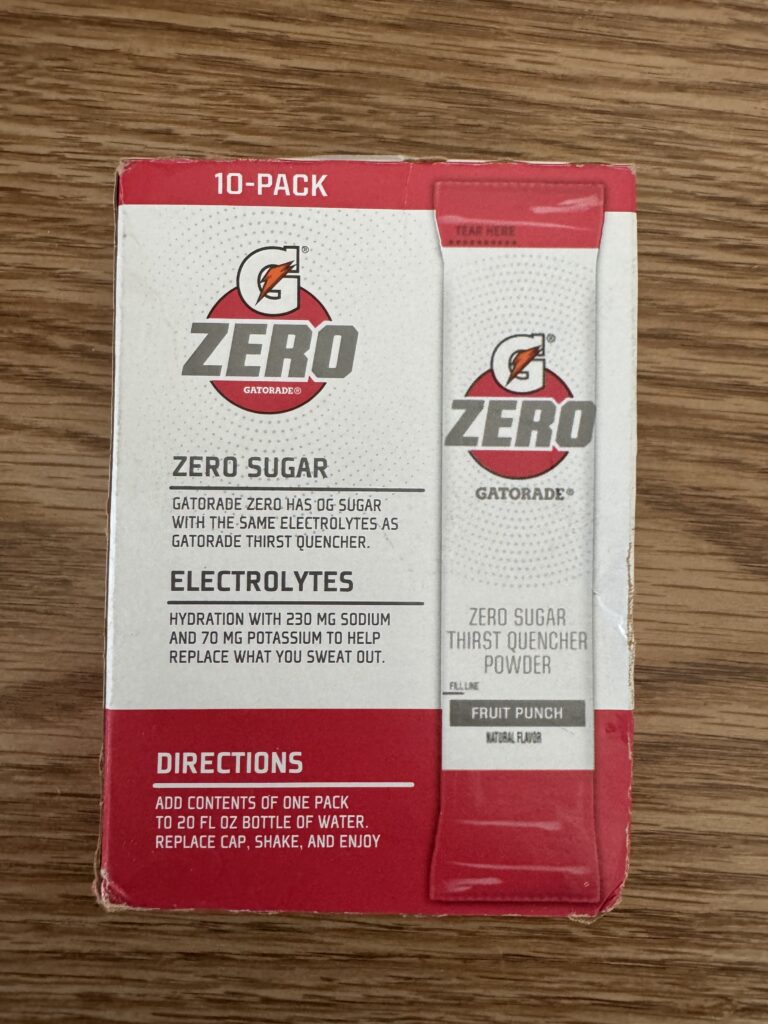
Gatorade. It’s been around almost as long as I have, developed way back in 1965. I first used it in the summer of 1979 in the Army training in Texas. Been a big fan ever since. If you’ve read this whole tome, you may have gotten the flavor that I’m cheap. I prefer frugal. Cost-efficient. I bought a bunch of boxes of individual Gatorade G Zero packets three years ago. Technically, they expired over three years ago. But do powdered chemical drinks ever really go bad? I used these successfully on training hikes and never vomited, so I went into the canyon with one of my one-liter bottles filled with Gatorade mix and a couple of packets for refills along the way. No problem. I still have an unopened box, should I return for an R2R!
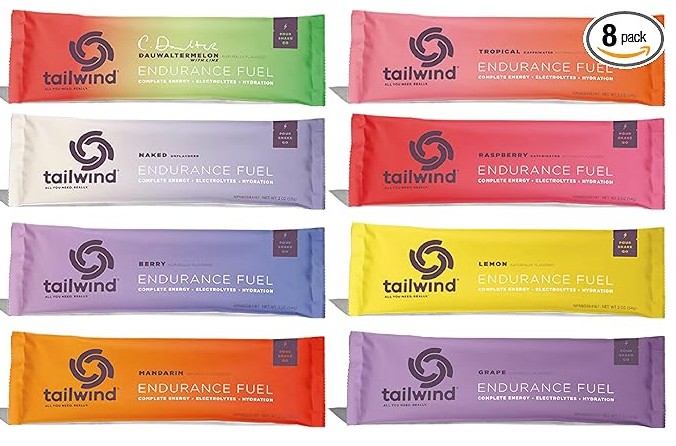
Tailwind. I spent some time at Fort Benning this year training US Army Rangers (in working with government bureaucrats — not combat operations!), and while there, they shared a couple of packs of Tailwind Endurance Fuel — a dense packet of electrolyte and vitamin replacement mixture. One Ranger told me he lived through a grueling days-long field hike on nothing but Tailwind and felt great. They gave me a couple of packets, and I enjoyed one coming out of the canyon. I thought of that Ranger when I mixed it with my water at the Colorado, and magically, instantly, felt like a commando climbing the Normandy cliffs. The mix packet is bulkier and heavier than other stuff, and yet if the Army Rangers swore by it, I was all in. It worked for me in training. I mixed it at Pipe Creek by the Colorado River and relied on it first on the hike up.
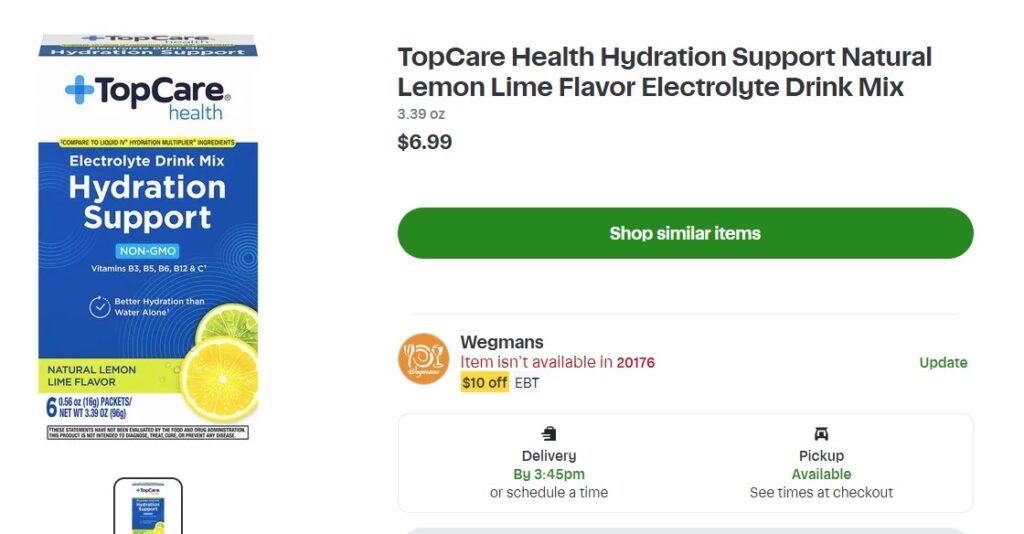
Liquid IV. There were lots of recommendations on Facebook for Liquid IV, and being cheap, I bought the Wegmans grocery store’s generic version with the same ingredients for a lot less money. I also mixed that at Havasupai Garden to augment the Tailwind. Both mixes are intense, serious electrolyte replenishment drinks and are far saltier and taste almost viscous compared to the Gatorade.
Do these work? Who knows – my only criteria is threefold: is the taste acceptable enough that I’ll drink it (yes), did they make me nauseous (no), and did I feel adequately refueled to successfully complete my endurance event (absolutely)? Perhaps other drinks would be just as good. I recommend my criteria, but go with the drink that satisfies those for you.
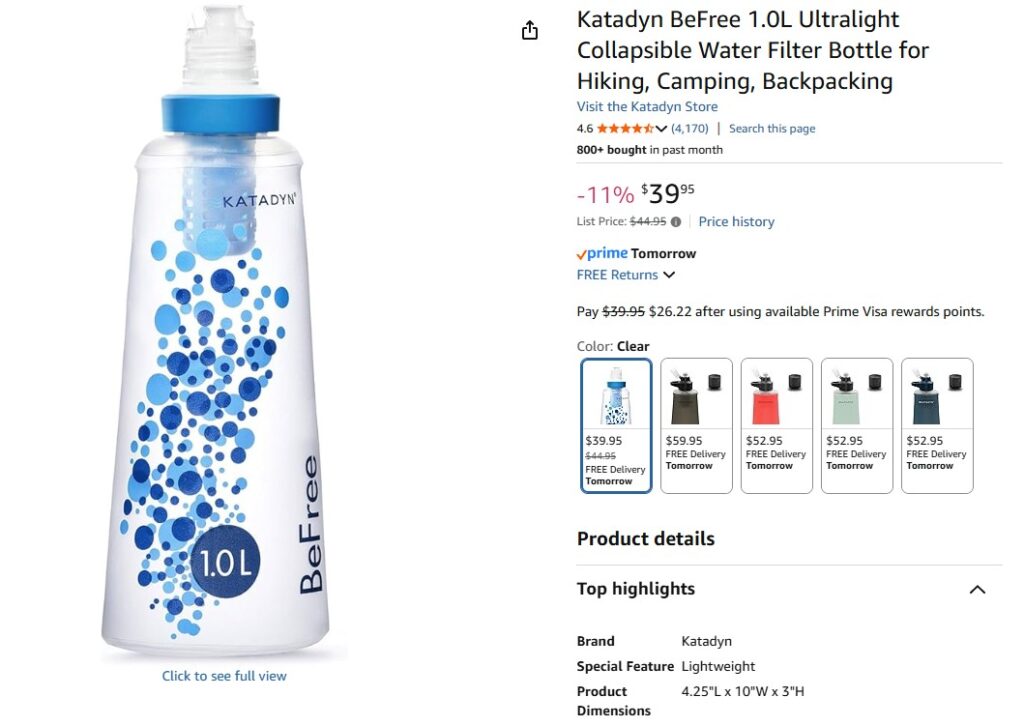
The water filter. Way, way high up on the list of important stuff. Running out of water, especially if the hike had been as hot as it could be, was the most frightening thing we feared – right up there in my head with twisting an ankle and rolling off a cliff. There is no water to be had descending South and across Tonto trail, with refilling bottles only possible just over nine miles in from a spigot if backtracking up Bright Angel to Havasupai Gardens, which we didn’t want to do, or over 12 miles in at Pipe Creek by the Colorado River – our plan. And at Pipe Creek, there is no spigot; you have to filter the water. And if something went wrong with the spigots heading up from the Colorado, there’d be more filtering to do.
Read all the stuff on the Facebook R2R page, and while some folks prefer the Sawyer, I went with the Katadyn 1-liter filter. The filter is in the cap, and the bottle is just a collapsible, thick plastic container. Just fill the bottle from the creek, reattach the filter/lid, and squeeze the water into a clean bottle. How hard can it be? I used it once training in White Oak Canyon and once at Pipe Creek to filter 2 liters and refill my cheap BodyArmor water bottles. The Katadyn was worth every penny just for those two hikes.
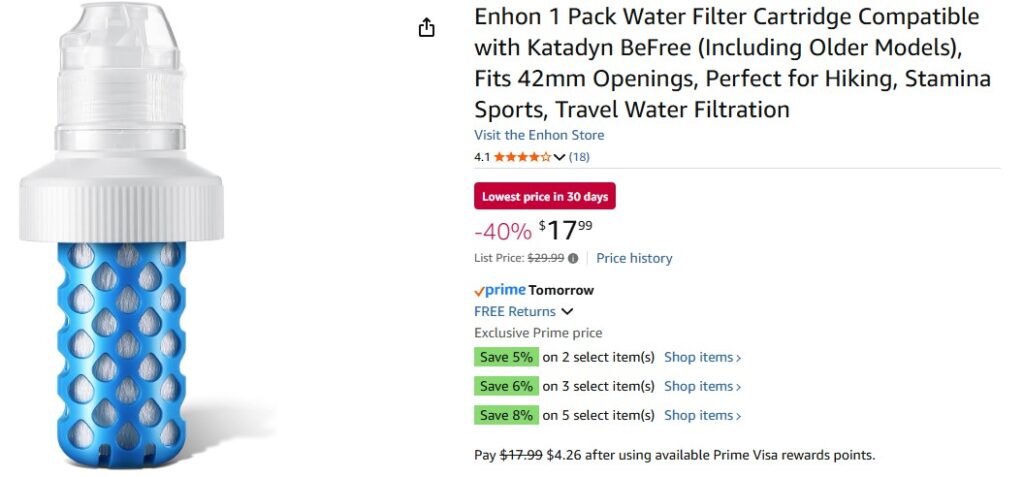
Extra Water Filter Cartridge. “How hard can it be?” he says. Even though the first time I used mine in White Oak, I let the filter top roll down the rocks into the rapids, never to be seen again. A replacement filter top cost me another $18, and replace it I did to be ready for the Grand Canyon.
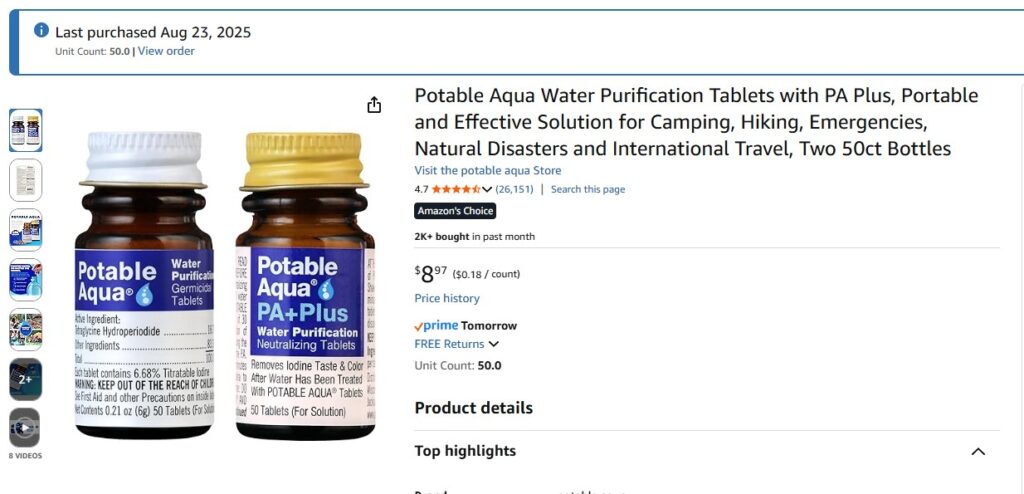
Water Purification Tablets. Let’s not forget the bottles of water purification tablets I splurged on. Yes, I took one into the canyon. The other is in a box somewhere in my garage. Wondering if I can recover my expenses selling them on eBay?
Electrolytes and the Like.
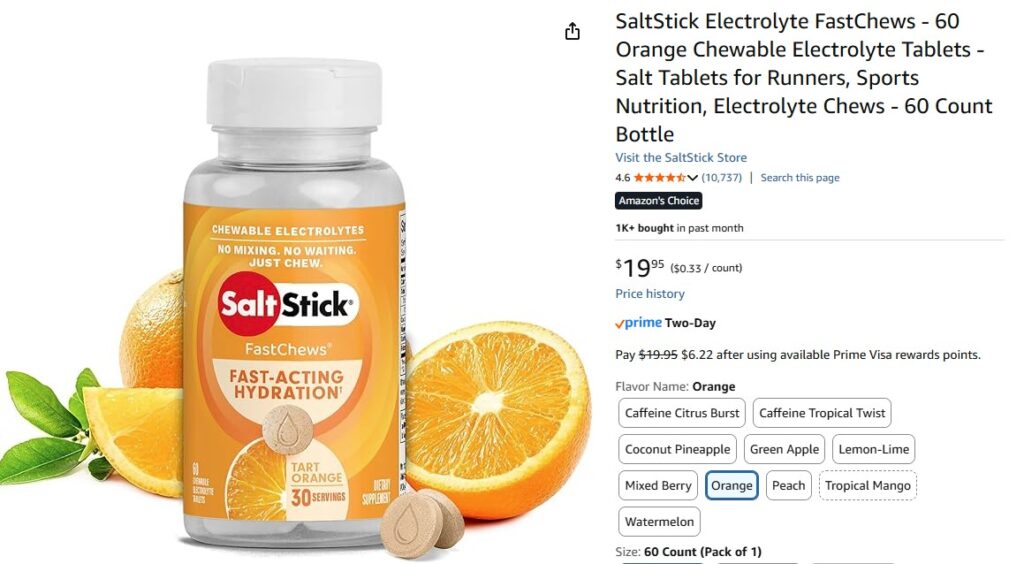
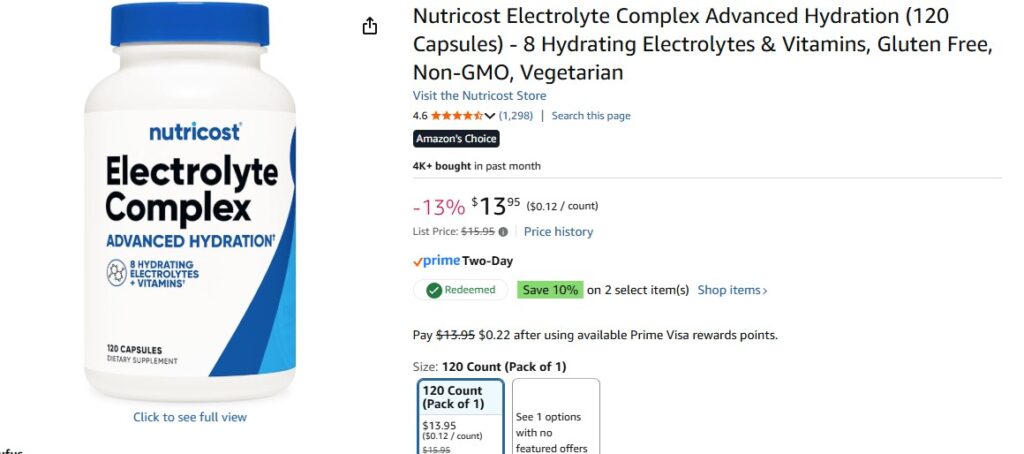
EVERYBODY raves about Saltchews. Or SaltStick, as it’s properly named. I was unaware until I read the Facebook R2R page. For years, I relied on Endurolyte capsules washed down with Gatorade or water, and now I buy the more generic version on the upper right from Amazon. They are quite similar in content, with the SaltStick versions being flavored and chewable (or better yet, left to dissolve in your mouth for a more even consumption, I’ve learned) – no water needed. I noted during the “What We Got Right: section of my after-action report that I had not paid attention to the very real risk of overdoing it on electrolytes. The SaltSticks taste like candy. I counted out exactly 15 for my little baggie, and tossed in a few electrolyte capsules for good luck. Again, with the cooler-than-expected weather, I didn’t even consume my whole ration.
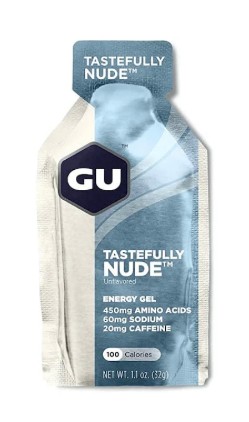
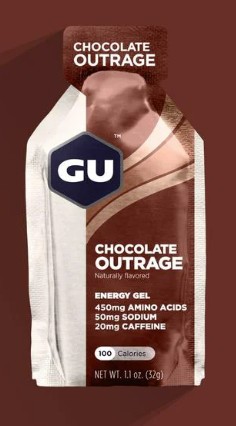
In marathons, I relied solely on gels for refueling, specifically GU—one per hour. I’ve tried a bunch and learned that when you’re eating four or five in a marathon (I was a four-to-five-hour marathoner!) as your primary refueling source, the sugary-sweet taste can be nauseating, so I lean on GU’s “Tastefully Nude” flavor. It’s not naughty at all; it just has no flavor. Maybe I’ll do a “Chocolate Outrage” GU early in an event and switch to the nudes later. I brought two or three on the Rim-to-River and only slurped one.
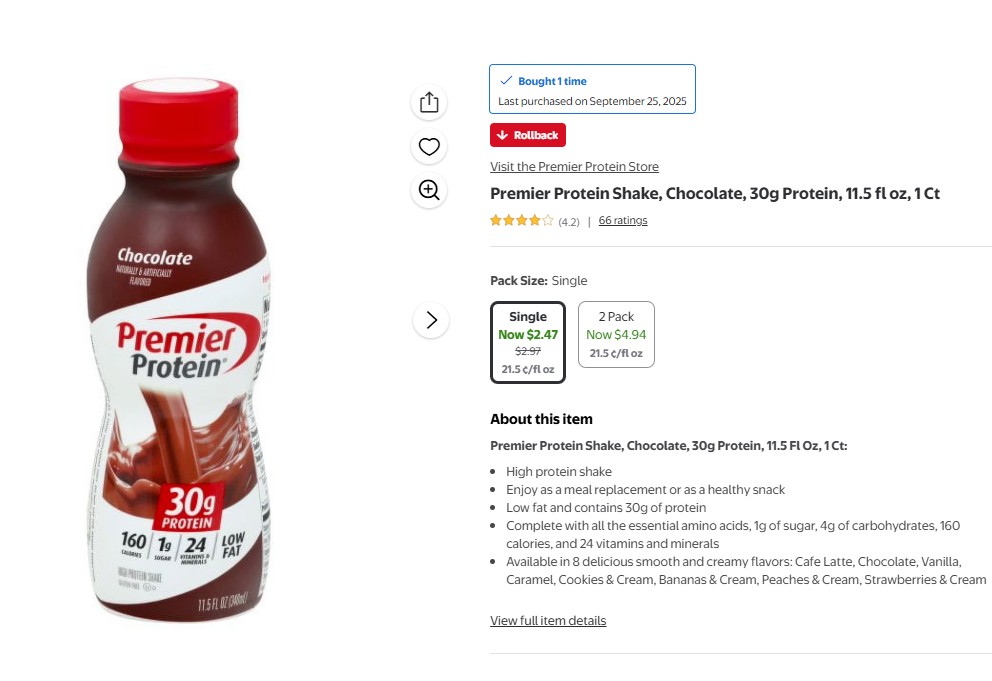
I took one bottle of delicious chocolate protein drink with me. I’m including this under “drink” and fuel, but it really was just a nice reward for reaching the Colorado River. Like a dessert. And with my handy dandy insulated lunch bag (below), it was nice and cold after hours of hiking.
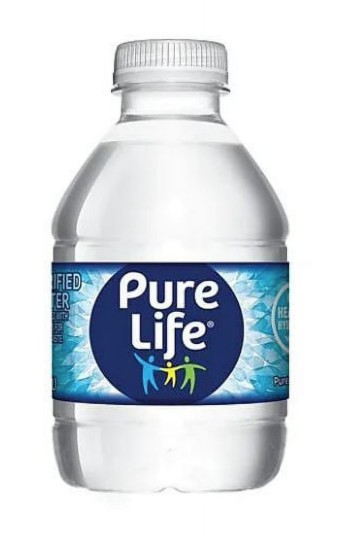
And last on my fluids, early in my hiking, I stuffed a tiny 8-ounce bottle of water in my pack for emergencies. Almost 30 years ago, I did a midnight hike in the Negev Desert with an Israeli Defence Forces guide, who said, “Never, ever drink your last drop of water. If you’re running out, always sip and leave just a little for down the road.” Never forgot that. Fifteen years ago, I joined an impromptu safari with workmates in southwest Ethiopia, and our Land Cruiser got buried in the mud. The local drivers took turns trying to dig it out and resting in the cab. Unsuccessful, and with no cell signal, we started hiking out. That’s when we learned that when the local drivers were resting in the truck, they drank all our water. We hiked out 10 miles in the sun, parched and more thirsty than I have ever been. One of my colleagues found a small bottle of water in his pack, and we all took a sip. It was unbelievably good to have even a sip. I wanted this 8-ounce bottle to be the bottle I’d forget I was carrying until I needed it.
My goal was to begin the hike down South Kaibab with three liters of drink. With the two one-liter bottles, the .7-liter Camelbak, the .3-liter chocolate milk, and the .25-liter water bottle secreted in my pack, I was covered until we could filter and replenish at the Colorado River. It worked.
Food for Thought.
At a minimum, hiking the Grand Canyon demands calories to refuel along the way. Healthy calories a bonus. I recall from my running days that we start an event with maybe two hours of glycogen stores, whatever they are, and need to replenish at regular intervals to avoid hitting the wall. “Bonking”, the canyon wall. The web tells me we need to take in 60 to 120 grams of carbs hourly to keep going. Pretty sure I had that covered with my menu choices below. We’ll start with the more substantive, then get to the fun and more rewarding food choices that kept me going.
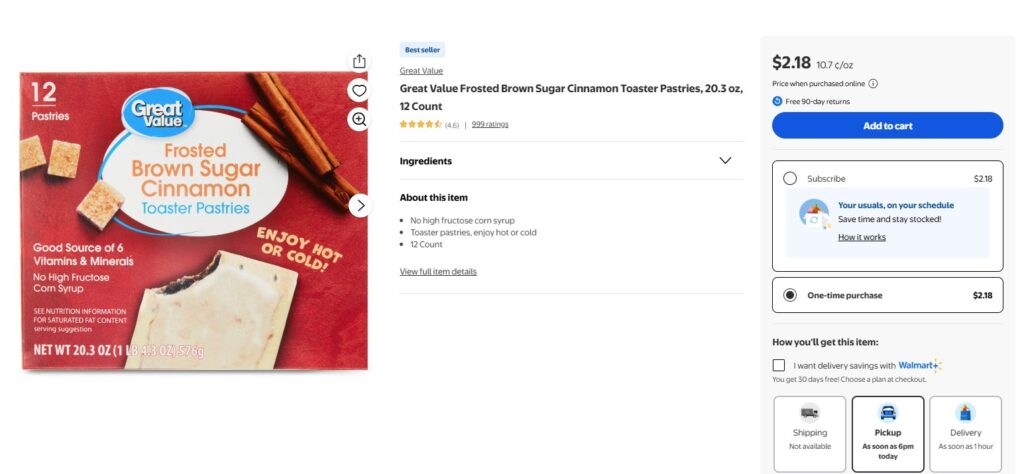
Breakfast is the most important meal of the day, right? Normally, I’d have a bagel and some yogurt, but before an endurance event, for me, it’s all about loading up on carbohydrates with the tastiest thing I can. I always start an endurance event with Pop-Tarts (yes!). Here me out. They have plenty of necessary carbohydrates, and unlike their health store brethren, they don’t taste like mulch. Easy to eat a pack to start the day, and a pack at key breaks on the hike, when everything seems unappealing, and you don’t really want to eat healthy, bland stuff, they’re a no-brainer. You don’t have to eat them every day for breakfast and can go back to sound food choices later, but I’m telling you there’s no better power food for endurance than Pop-Tarts. Brown Sugar Cinnamon. Tell ’em Chuck sent you.
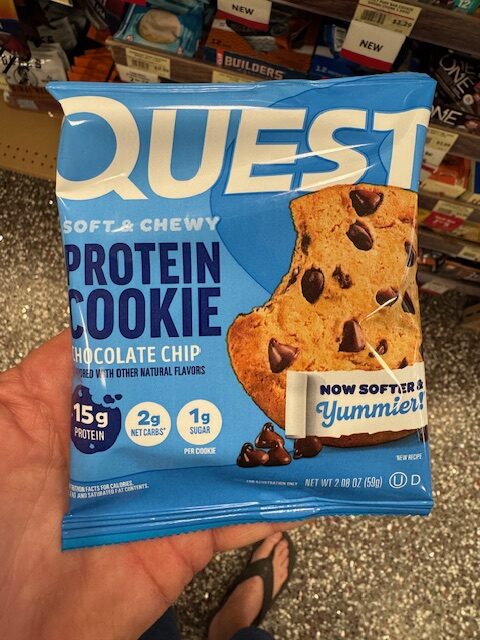
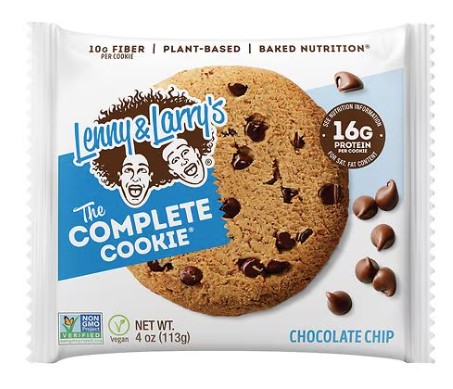
After an entire summer of eating chocolate chip cookies in search of protein (my, my, my, the stories we tell ourselves!) I went with the Quest. I liked Lenny’s, but his cookies weigh a quarter pound…each! When I was interested in downsizing (my pack load), I learned Quest cookies are only 2 ounces and chock full of protein.
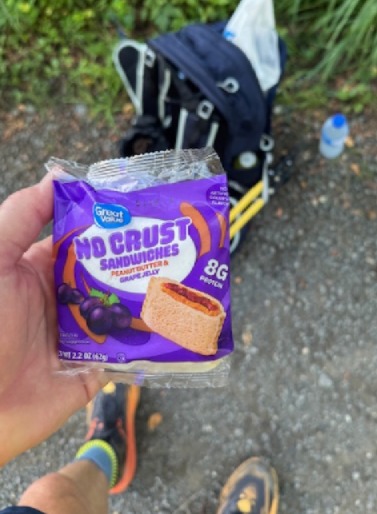
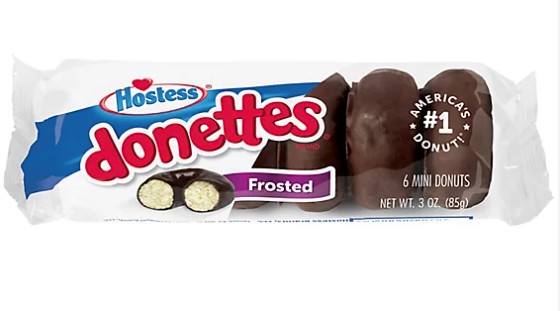
Uncrustable PB&J’s. Prepackaged peanut butter and jelly sandwiches, which, while sold frozen, will last days in carry-on luggage and in the canyon and not spoil. Google it. And go with the Walmart Great Value over the name brand to save money. They taste the same. Like the Pop-Tart, it’s real food and not just a snack. I took four into the canyon. Loved them. Mike’s idea to buy donettes, and I caved quickly. I cannot imagine being too tired to eat these energy bombs. Sadly, I can be too tired to remember I brought them and forgot to eat them on the hike. I ate broken and crumbled donuts over coffee the morning after.

A slice of pizza leftover from dinner the night before at Maswik. Packed in my chilled lunch bag. Everyone on the web says they crave some real food deep in the canyon. They were right. Tasted so good to have real food.
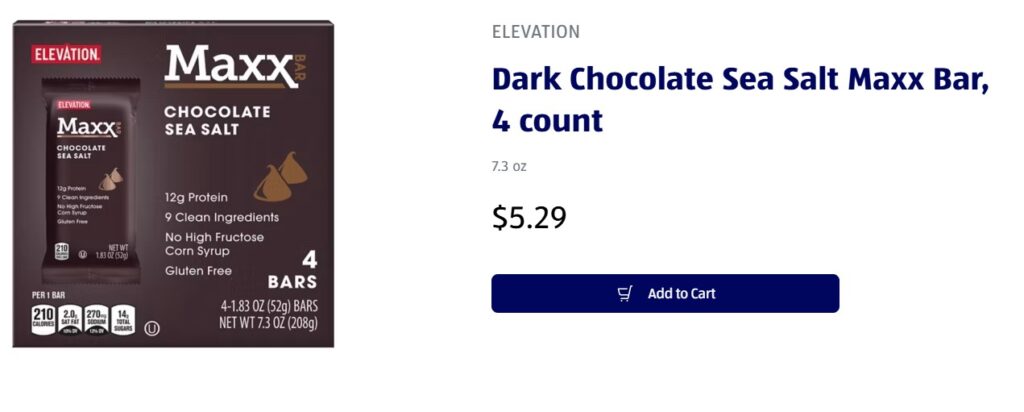
In training, I relied on these protein bars from a specialty grocer…Aldi. Cheap. Effective. Small. Chocolate. They are a bit heavy and chewy, so I had to eat one or two early in the hike before even my jaws were tired.
SNACKS
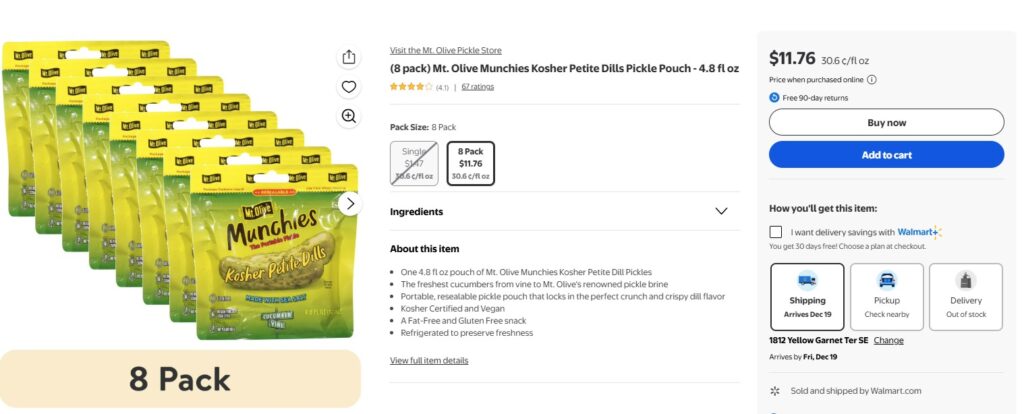
A pack of pickles, chock full of sodium to keep calves from cramping. Handy leak-proof packs. Quite refreshing in addition to being healthy for hiking. I only took a pack – not an eight pack!
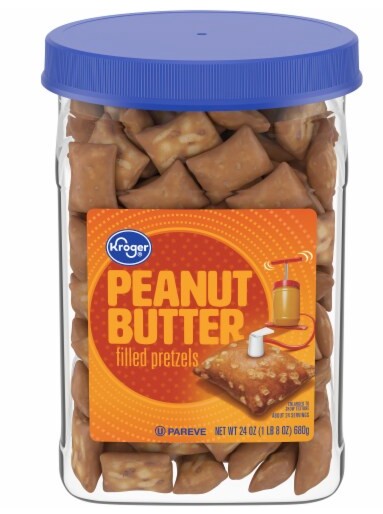
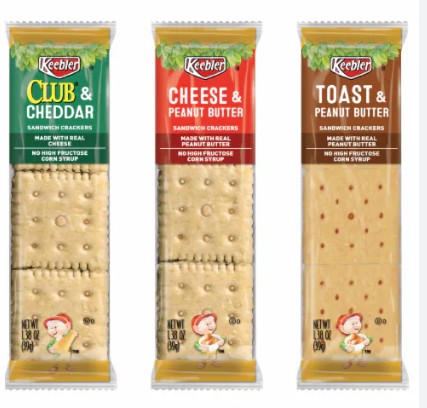
I learned from other hikers that salty stuff is good. So more salty stuff must be really good. I went through three or four of these giant jars of pretzels in training and brought more into the canyon. Not the whole jar – just a large handful in a baggie, and nibble a few at every stop. Good stuff. The crackers not so much. Helpful, but they coagulated in my mouth and made me drink more than I wanted to or needed to mush them enough to swallow. They were better over Modelos at the after party.
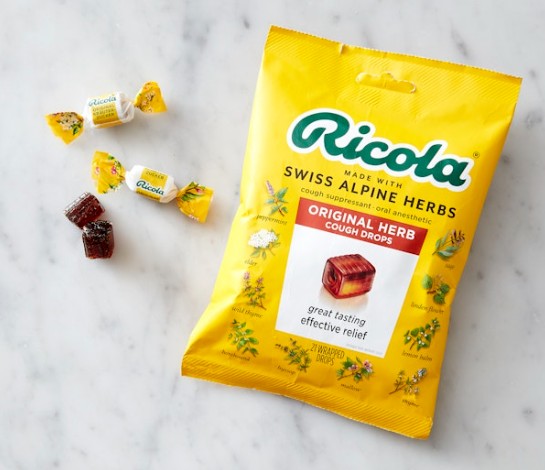
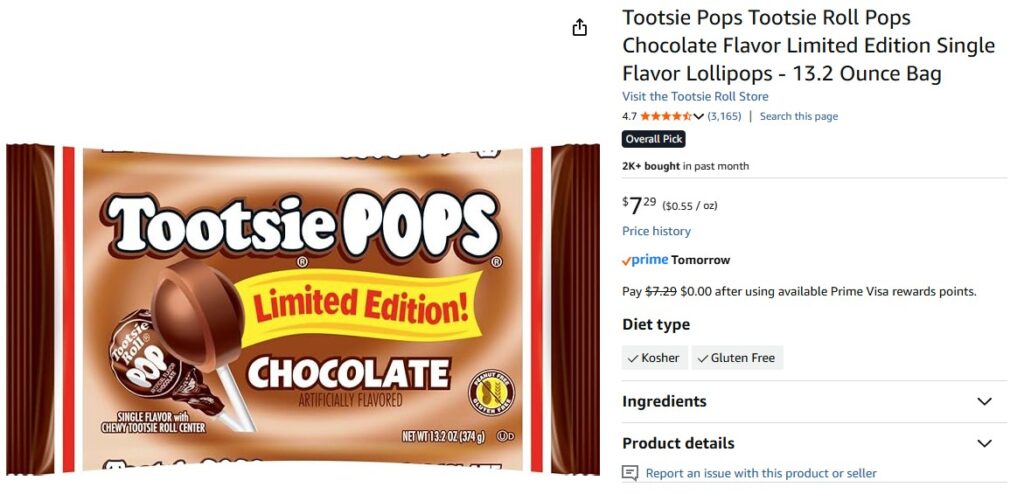
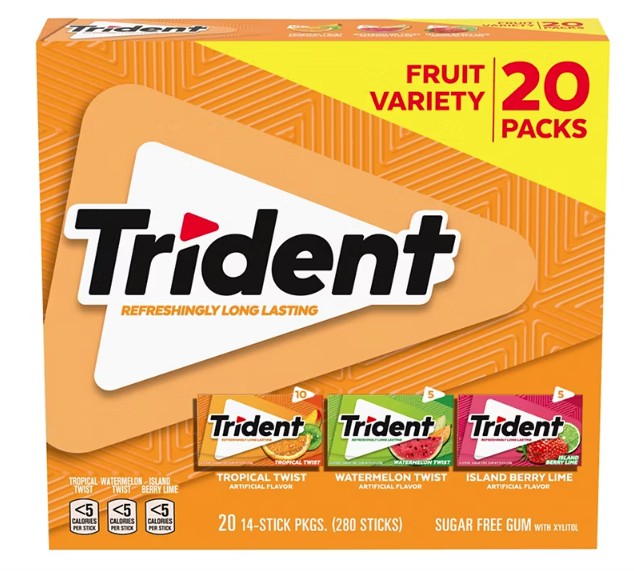
And finally, rewards. Running long distances, I needed to break up the hours with treats. Hourly, I took in a gel, but on the half hour, I’d pop a cough drop and let it dissolve, keep my mouth from getting dry, and just entertain myself for a bit. Ricolas last a long time. Same with Trident gum. Sometimes I would live on the edge and roll chewing gum around the cough drop – oh my what a glorious treat for miles! They worked for the Rim to River also, carrying a handful of each in a baggie in my pocket for easy access. New for my hiking career, I added Tootsie Pops. Again, slow to dissolve as long as you don’t rush it and bite through the candy to get to the chewy chocolate. Patience.
Medical Stuff – Emergency and Not So Much.
There are lots of prefabricated first aid kits available for hikers. I considered them, but learned that Mike carried a small, lightweight bag of emergency stuff that made sense for him, so I did too. I admit that I took some pictures of the contents list of the first aid kits at REI to get ideas on what to carry. Then I made up my own.
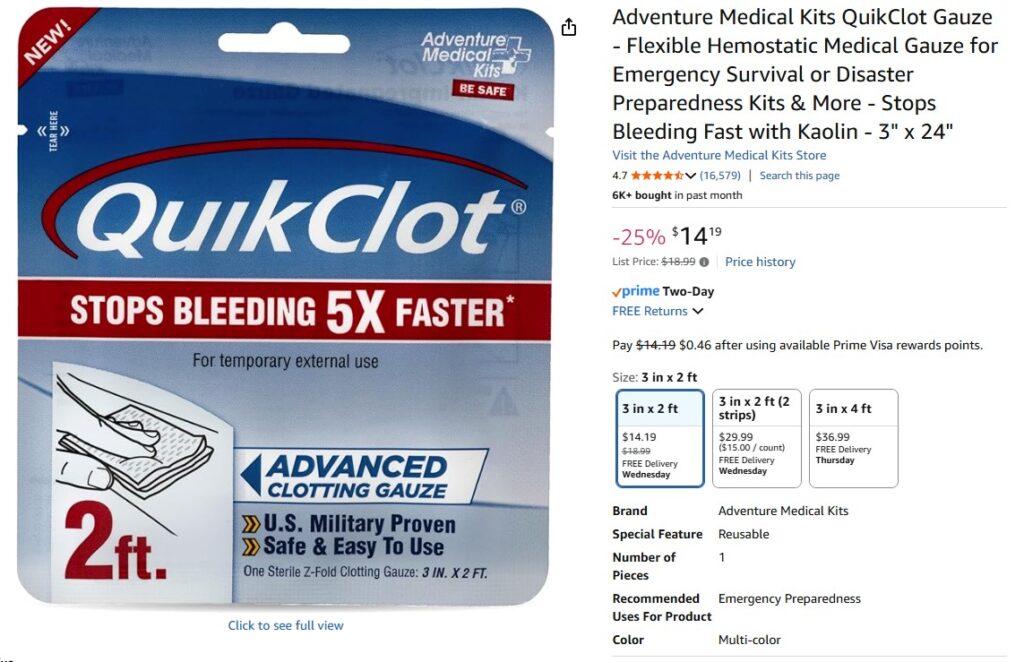
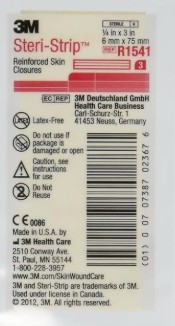
As a three-time blood clot survivor now on blood thinners for the rest of my life, the notion of falling and cracking open my noggin could be a problem. I really don’t worry about bleeding out in my daily life, although deep in the Grand Canyon, it’s a very real risk. I keep one of these QuikClot packets in every backpack and now, my cars. They aren’t cheap. Not a place to be cheap. And thinking in the unlikely event I took a tumble and was fuzzy-headed, I made sure Mike knew what pocket this packet was in. That said, Mike is admittedly squeamish around blood, and there was a very good chance he’d get woozy, too. I had high confidence he would come through for me. I also packed some Steri-Strips and Band-Aids to close up gashes, cuts, and blisters.
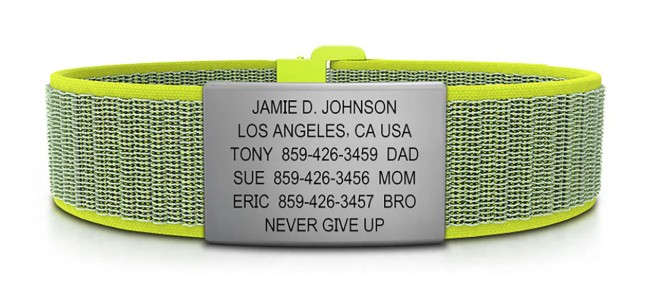
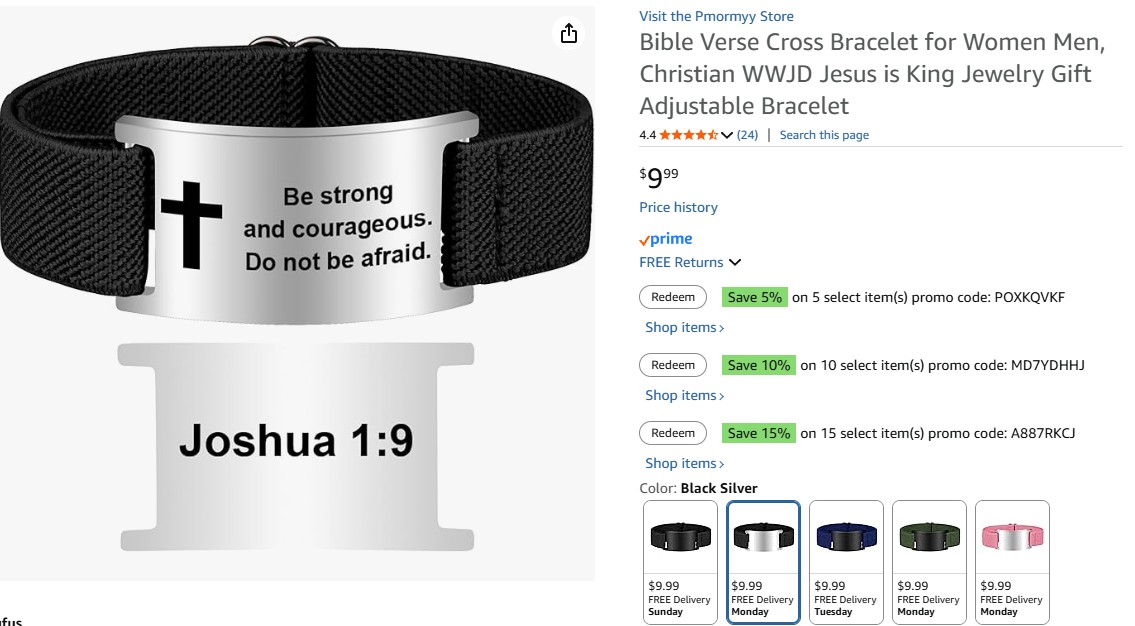
I’m going to include my bracelets as emergency gear; the RoadID emergency point of contact one on the left, and I guess my Bible verse on the right, suitable for either inspiration or last rites. Years ago, when I lived in Germany, I’d run 10 miles deep into the woods in the winter, where wild boar roamed, only to realize I often had no identification on me. To pass the time, I’d wonder if I collapsed and died, how long it would take for the Germans to figure out I was an American, and how much longer to find my loved ones and tell them I’d expired? I’d also wonder whether wild boars eat humans. (My fatalistic approach to the outdoors is not limited to the Grand Canyon.)
That’s when I bought an emergency ID bracelet from RoadID for maybe $20. I had the ID tag engraved with my wife’s phone number, my nickname (I didn’t want first responders calling me Charles, and I’d ignore them because I’m Chuck, and seem even more disoriented!), NKA (no known allergies), my blood type, and my motivational slogan “Keep Moving Forward” on it. A few years later, I got hit with blood clots and started blood thinners, so I added the meds “Eliquis” to it. RoadID also sells a small caduceus tab for a general medical alert that one can add or remove as things change. I’ve had to update the tags with new phone numbers (but not new wives) over the years. I think an ID tag with critical information is an absolute must. The Bible verse bracelet was $9.99 from Amazon. Lots of choices on verses, or other inspirational sayings, and a small price to pay to stay on the good side of the Lord.
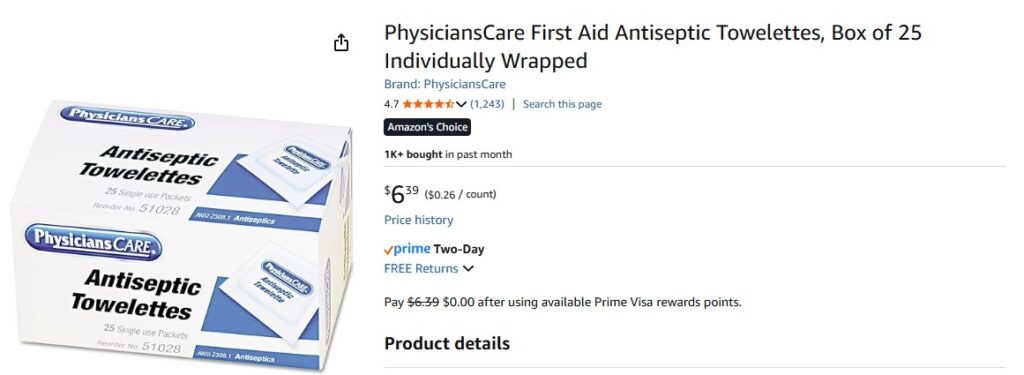
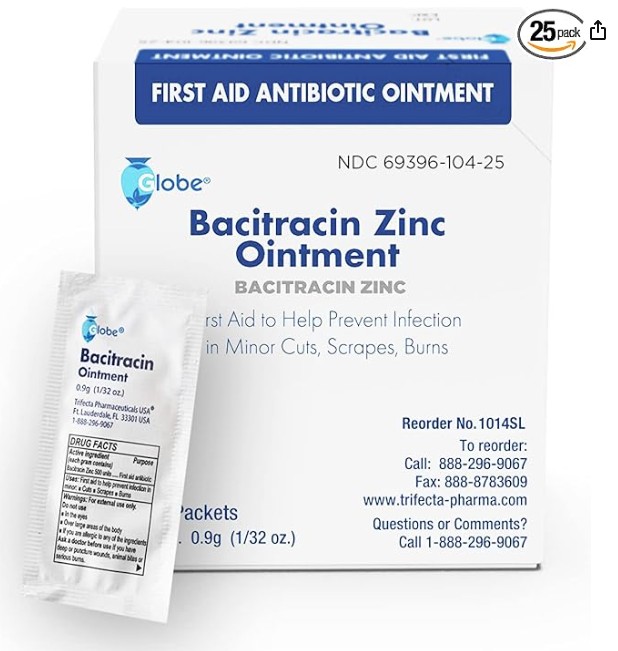
To save weight, though not money, I splurged on boxes of individually wrapped supplies and plucked a few packets for my first-aid kit. I figured antiseptic wipes to cleanse wounds or punctured blisters made sense, and some antibiotic ointment after treatment couldn’t hurt. Better to have and not need…..
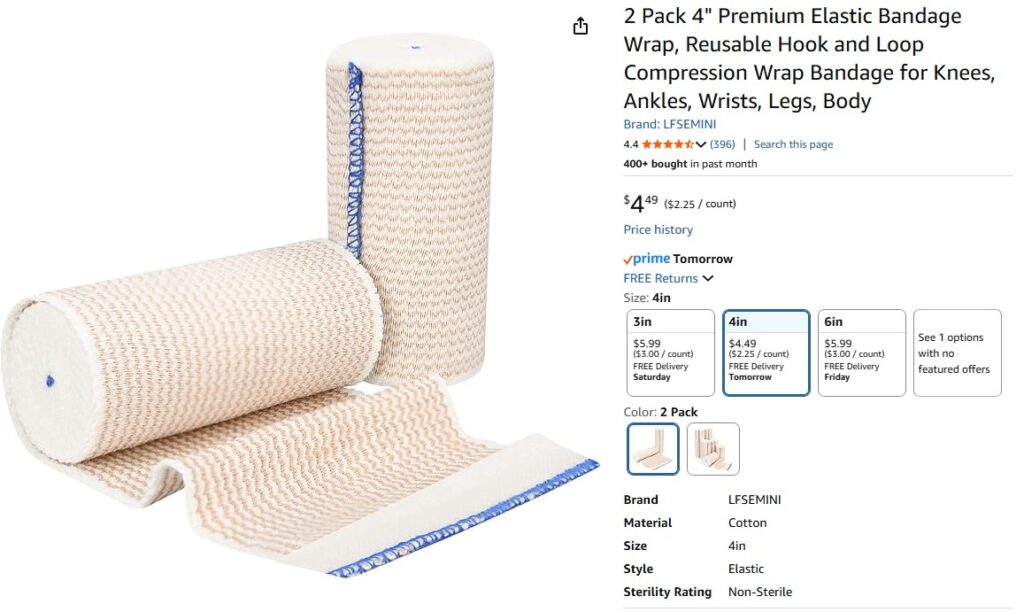
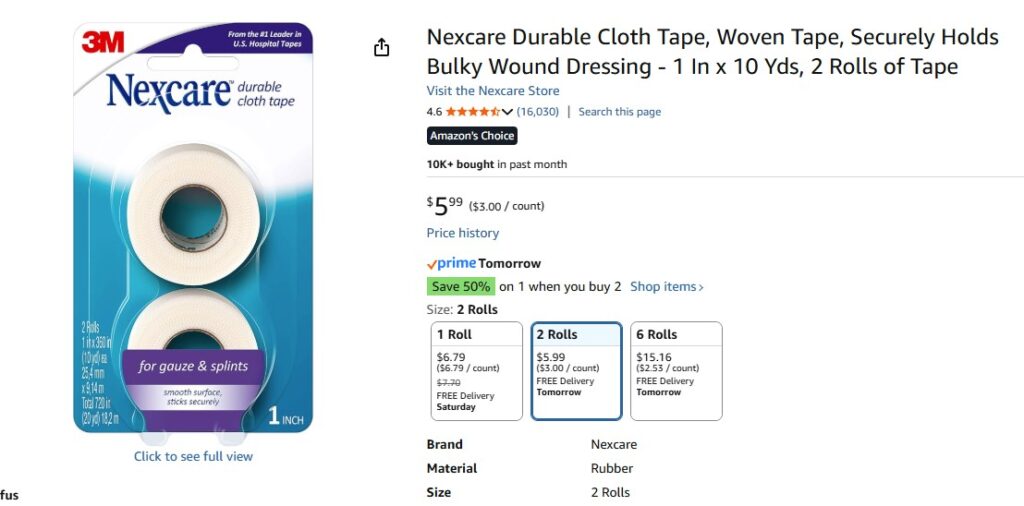
Bindings. Also in the category of “something got twisted, and we gotta hike out”, I brought an ACE wrap and some medical tape. Lightweight and hopefully not needed. It wasn’t.
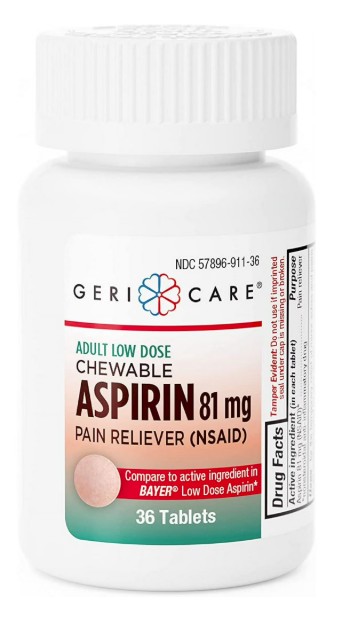
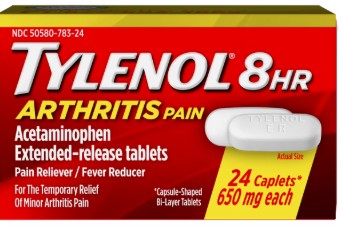
Light Drugs. The low-dose aspirin was for what my cardiologist called that very unlikely but highly problematic “clutching your chest when it feels like a boat anchor dropped on it” sensation, indicating a heart attack. My pre-hike examinations gave no reason to think this was in the cards, and yet it was a nice insurance policy to have three or four of these chewable antidotes if it went bad. Otherwise, I took a pair of arthritis-strength Tylenol before the hike and packed a few more for during the hike, if I needed them. I don’t recall taking a second dose until safely in the hotel room after the hike. Didn’t take the aspirin!
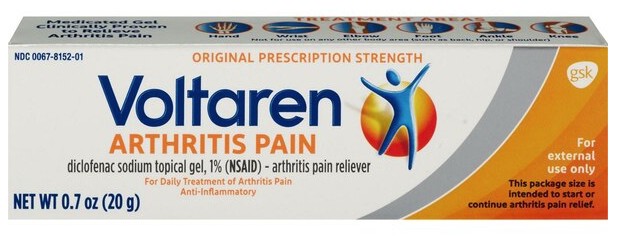
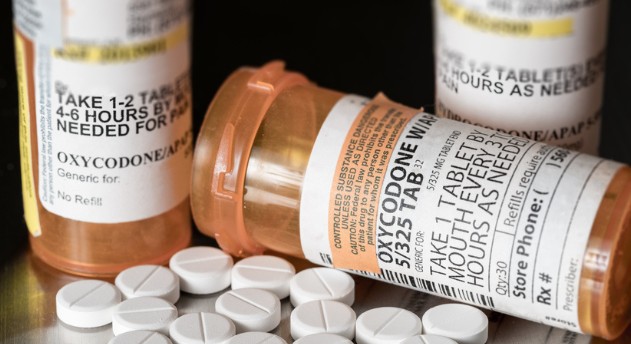
Let’s talk heavy-duty painkillers. Prescription-strength stuff. Before blood thinners, Voltaren (Diclofenac) pills were magical once in a while when my back went on the fritz, or my joints rebelled after a marathon. One pill and overnight I’d be 75% better. Can’t take them anymore with blood thinners, although the far less effective (for me) over-the-counter cream is allowed. So I packed some for medicinal and placebo effects. I also learned from the R2R hiking crowd that the Rangers are unlikely to call in the medevac chopper unless it’s life-threatening, and one fellow posted that he hiked with Oxycodone, should he snap an ankle and need to endure a tough hike out. That got my attention. I packed four Oxy’s in a clearly marked vial and was grateful they werent needed.
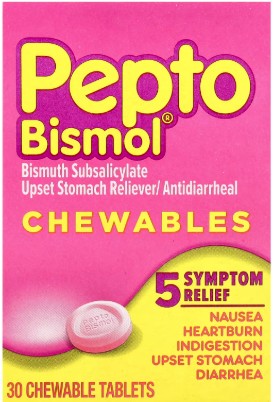
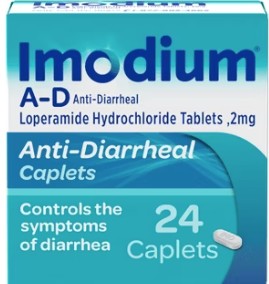
Trouble Down Below. I cannot imagine having stomach issues on a day-long hike. I’d rather sprain an ankle than have my belly bubbling, even though there were toilets at quite a few way points on the Rim to River. As with other endurance events, I planned to chug a variety of drinks and gels, fruity, sugary, and high-energy, and eat massive amounts of salty and sugary snacks. Add in some filtered creek water. I’ve always chewed up two to four Pepto Bismol tablets along the way to get ahead of any stomach disorders and did so in the canyon. And just in case it all went to shit (sorry, I couldn’t not do that!) I brought along a couple of doses of Imodium. I’ve bought boxes and boxes of Imodium since I first did an assignment in the third world almost 40 years ago. Thrown out more than a few expired boxes. But the two or three times I needed to put an end to stomach distress, these were worth their tiny weight in gold. Insurance.
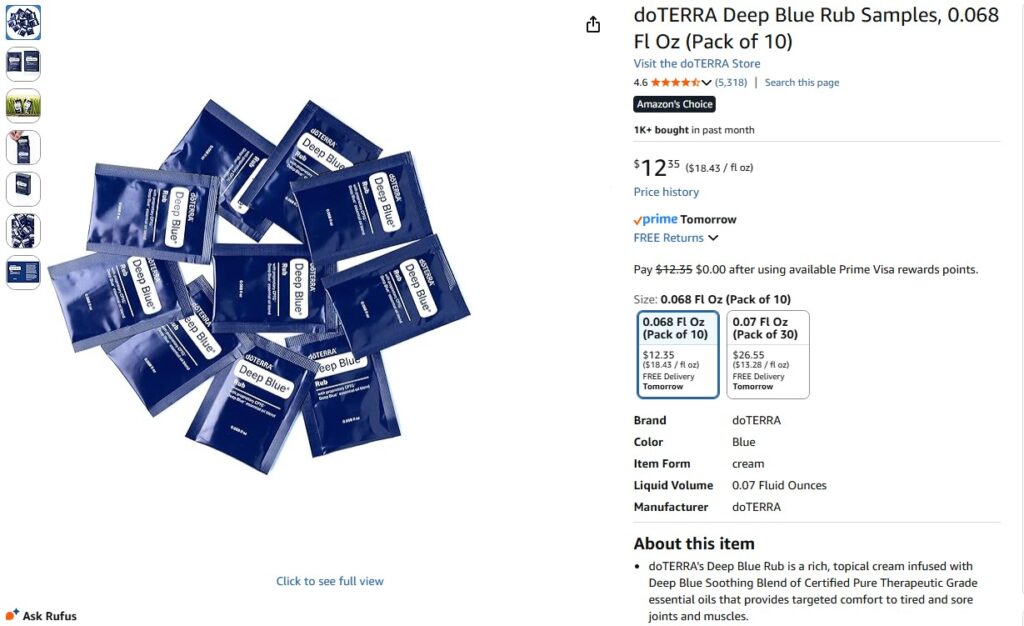
Deep Blue. Their marketing says, “With close to 5 ml of doTERRA’s top-selling Deep Blue essential oil blend of wintergreen, camphor, peppermint, blue tansy, German chamomile, helichrysum, and osmanthus, Deep Blue Rub is an essential addition to your bathroom cabinet, gym bag, or first aid kit.” I would have been fine with Icy Hot or Bengay. Only Deep Blue came in a box of 10 sample-sized packets. A bargain at less than a buck and a quarter per packet. I brought some on training hikes and shared them with Mike. Brought several into the Grand Canyon, and we used them at the Colorado River. Placebo? I don’t know. It felt good for a short while. Pro tip – one packet was good for one knee or one calf. Bring a bunch.
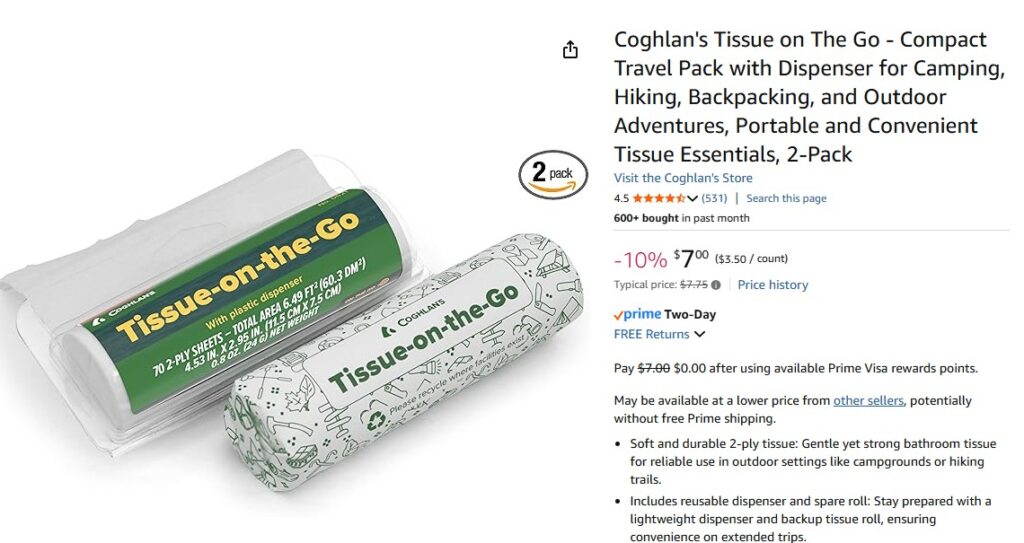
TP. I had hoped for, and succeeded in, a total digestive system lockdown for the hike, and of course, planned for the opposite. For training hikes, I unraveled some toilet paper and stuffed it into a small baggie. For the Grand Canyon, my Girl Scout leader wife insisted I bring the Girl Scout-approved tissue dispenser above, so I did. Pleased it never saw the light of day. Or the dark side of the moon.
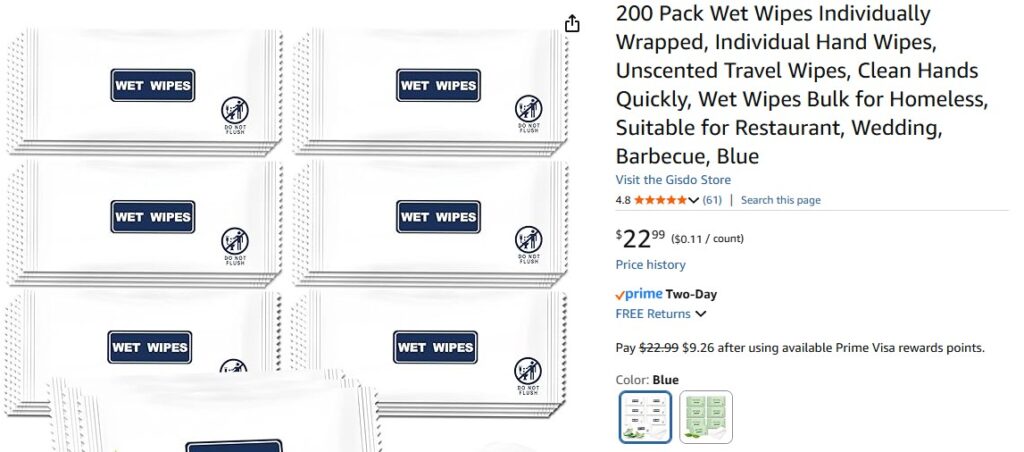
Cleanliness is Next To Godliness. I did not buy the 200-pack of wet wipes above, because I am a serial hoarder of individual wet wipe packets from restaurants, doctors’ offices, and United Airlines. I have a lifetime supply, and I cannot say no when more come my way. I have a surplus supply of dried-up, expired wet wipes from restaurants that aren’t even in business anymore. I packed a sandwich bag with maybe a dozen, not expired wet wipes that would come in handy to clean my hands, use if the toilet paper ran out, and even mop my brow for some cool relief in the heat. (I did bring a small bottle of hand sanitizer for more cleanliness oomph.)
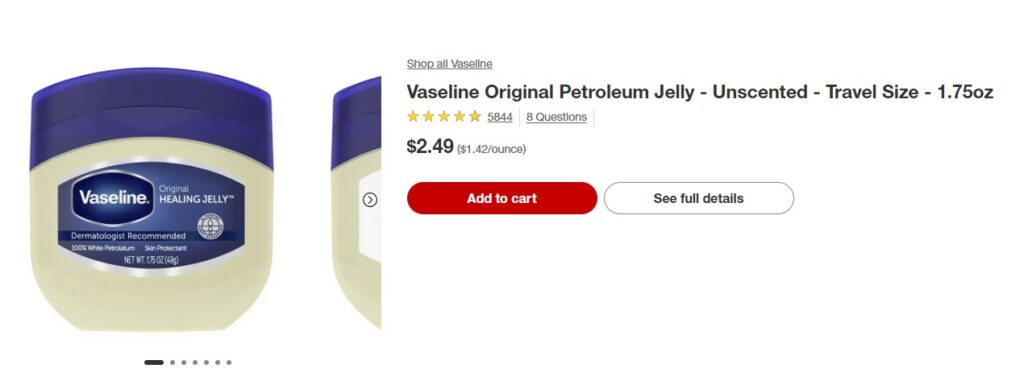
Slip Slidin’ Away? I bought and packed the smallest plastic jar of Vaseline I could find, just in case anything starts to rub during the hike. At less than 2 ounces, it’s an easy carry. For long runs and hikes, I slather my feet and toes with a thin layer before donning socks, and I never blister. Mike and I discussed the pros and cons of carrying some diaper rash cream like Desitin, and I left my tube in the hotel room. I’ve never used Desitin in advance. I don’t see it as a preventative like Vaseline, and it’s best for later remedying damage done.
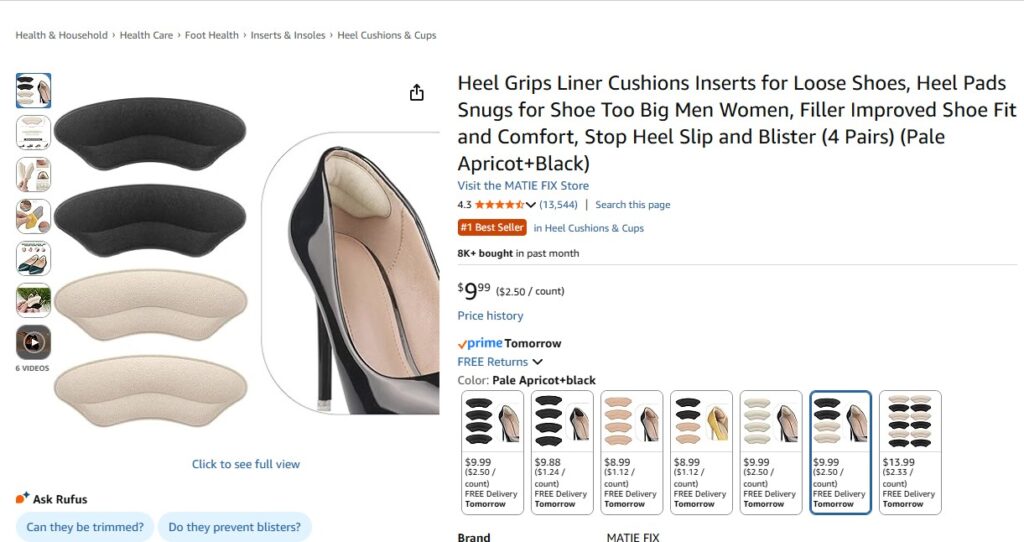
This was Mike’s hack, and I think it’s kind of neat. Early in our training, he gifted me a pair of heel pad inserts meant for loose shoes, and they’ve been in my first-aid kit ever since. Fortunately, I haven’t needed them, but if things start to rub, I can imagine they would be pretty effective.
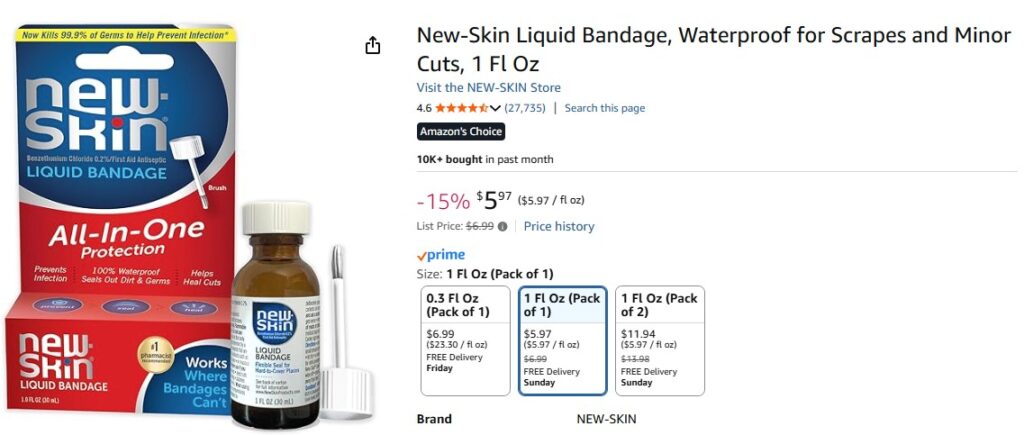
Another insurance policy for cuts or blisters – a small bottle of liquid skin. Unused. Thankfully.
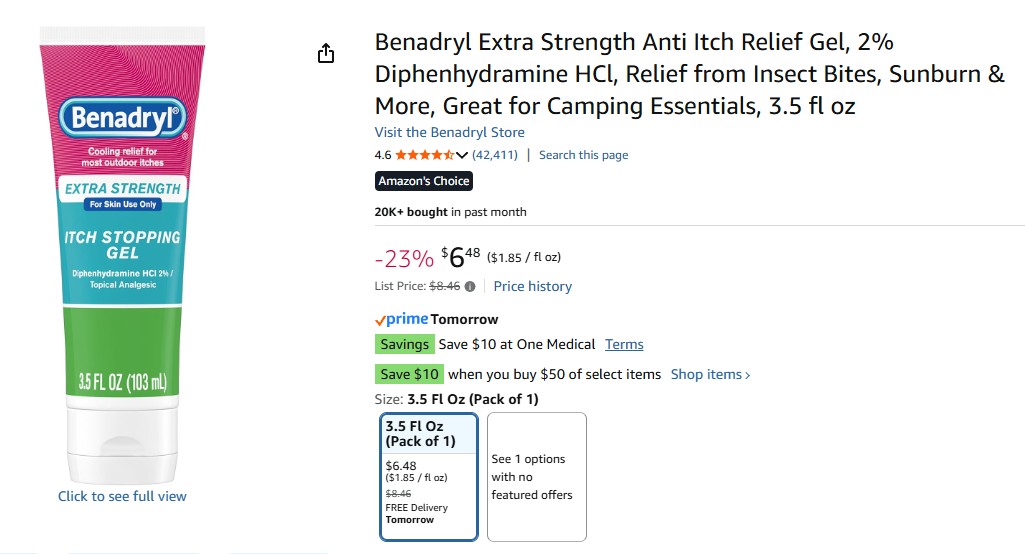
Who knew what lurked in the canyon? Little things that might bite. Vegetation that might irritate? Packed some gel in a small container (below) and marked it “ITCHY” to keep it separate from the Diclofenac cream.
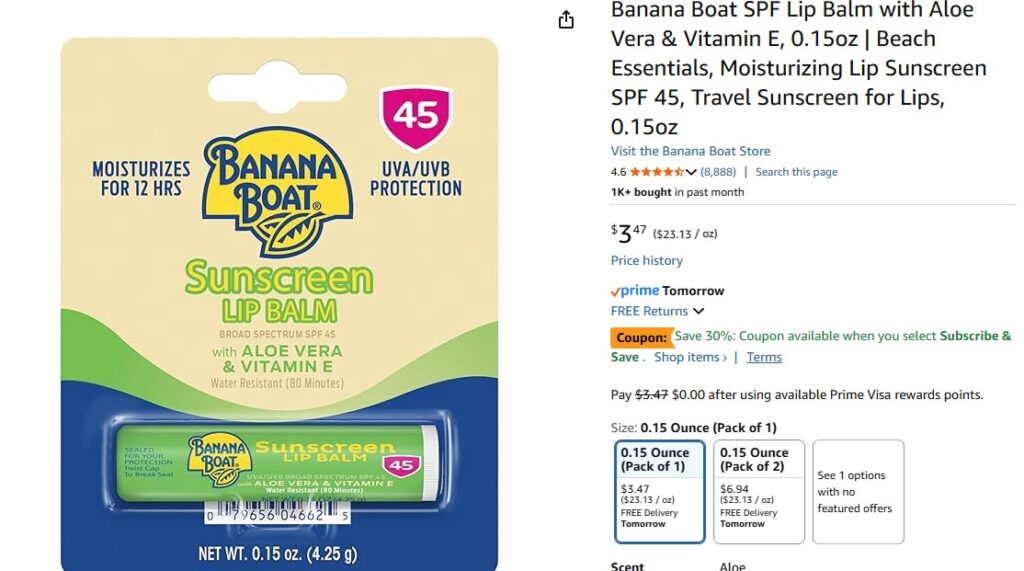
Expecting the sun to parch and bake me, I heeded the Facebook R2R advice to have some good UVA-protected Chapstick and went with Banana Boat. It says it moisturizes for 12 hours, and since I was too lazy to repeat my morning application, it must have lasted. I suspect, as with all lip balm over my 65 years, I will lose this unit well before it runs out.
Containers and Fasteners.
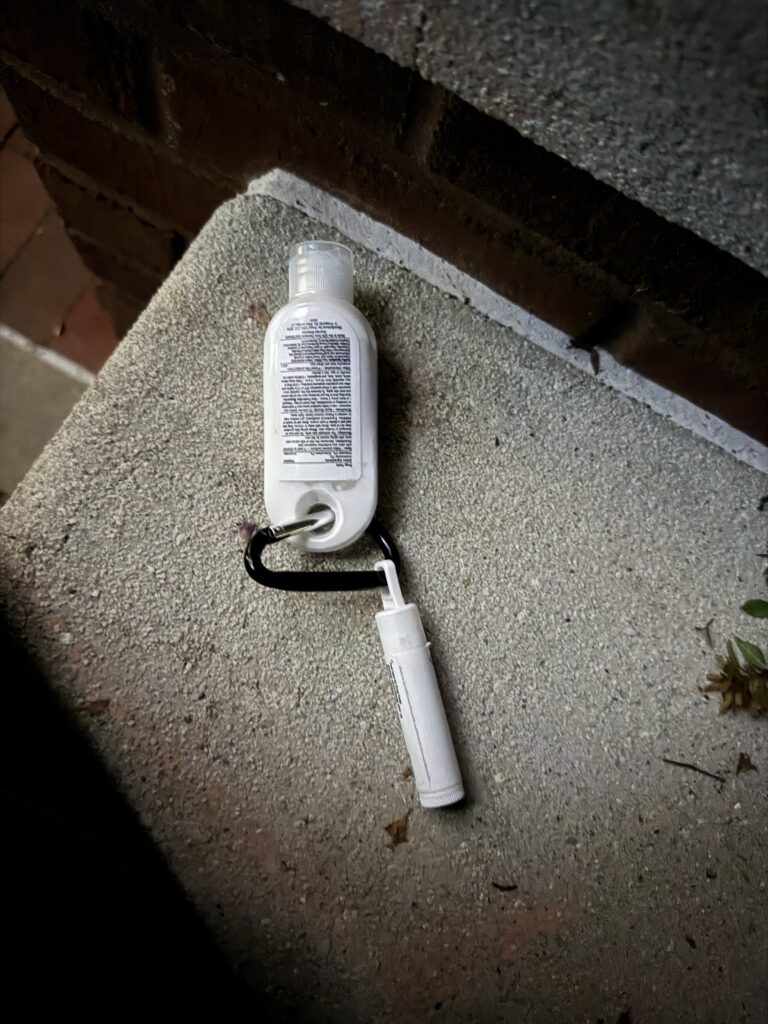
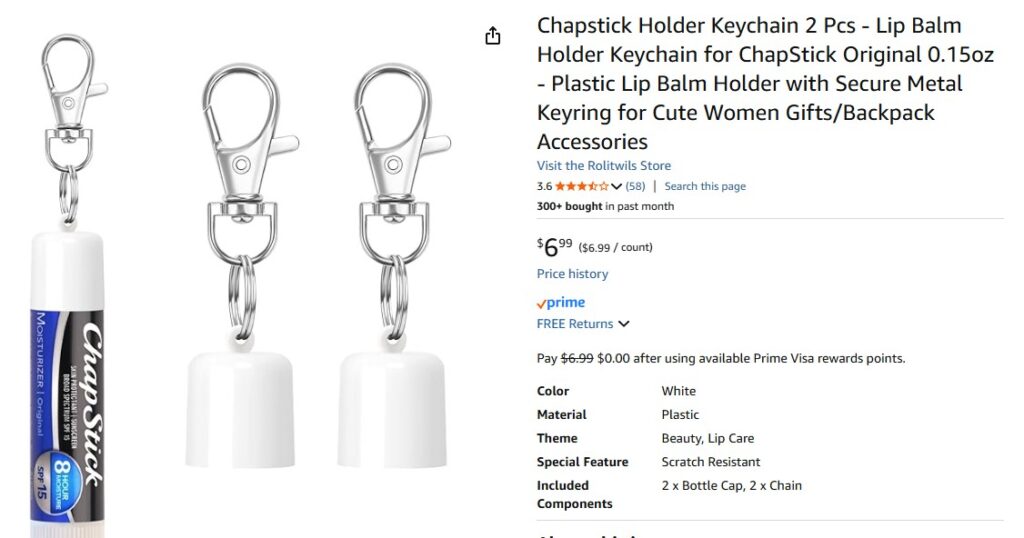
Who knew there were Chapstick lids attached to keyrings that you could link to your backpack for easy access all day long?! I didn’t. But I was at a music festival, and when I sat on a retaining wall, someone left behind a little D-ring with chapstick and sunblock, and it had this amazing little cap with its own eyelet. With no owner in sight or to be found (I didn’t just steal it), I took it. Ditched the Chapstick (Remember Napoleon Dynamite?) and kept the cap and D-ring. Washed it thoroughly and added it to my personal Banana Boat Chapstick. So I didn’t buy the one above, but I would have had I known they existed. Truth be told, I used my Chapstick once on the whole 13-hour hike, and it was easier than retrieving from my pocket or pack. I can attest that the Banana Boat remained securely in place in my handy-dandy stolen cap through the whole Rim to River, and is still attached to my Osprey in my garage.

I got a kick out of these little cheap and waterproof pill holders. I only used the red one to keep my four heart attack aspirins in, and secured it to the left chest strap of my backpack – right over my heart! Subconscious? I don’t know. My water bottle was over the right strap, so not a lot of choices left. I considered using the blue or black one for the OxyContin, but couldn’t write on them to make it really clear what was in them, and abandoned that idea. The better storage option is below.
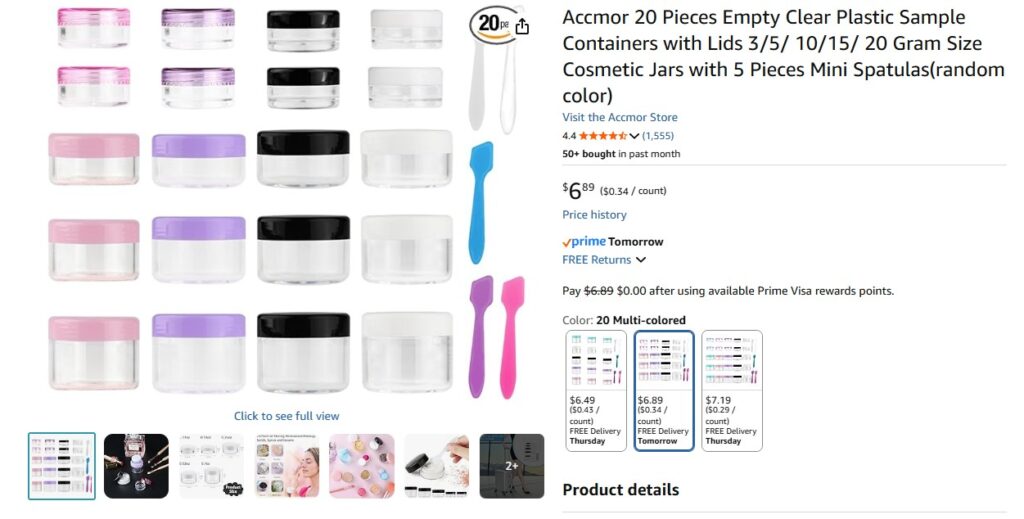
One of my favorite hacks. Twenty little screw-top, clear containers – three sizes – for less than $7. I secured four Oxy’s on one and marked it as such with a Sharpie. Four Diclofenac pills in another for something in between expected pain and a snapped ankle. A couple of Imodiums in a small container. I squeezed Diclofenac cream into another just in case. Bug bite cream in one. These little containers allowed me to avoid packing whole tubes of antidotes or baggies of pills that could get mixed up.
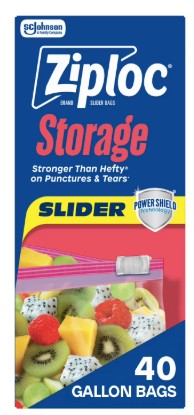
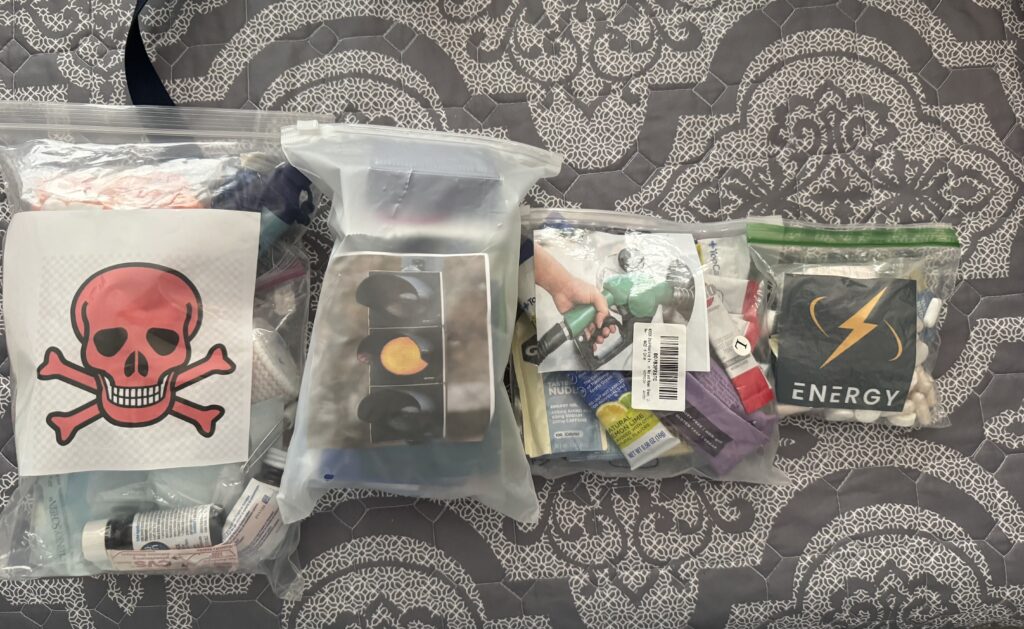
Baggies. Gallon-sized. Quart. Sandwich. Snack. Baggies of stuff inside of baggies. Ice in baggies. I love Ziploc baggies. Without them, I end up with a backpack full of mixed-up crap and can’t find anything. I created my own visual system for finding stuff (above right). The skull and crossbones were for serious medical stuff if things went really badly, but I wouldn’t need them in an emergency, such as the blood clot bandage, cardiac aspirins, and water purification tablets. The caution stoplight bag contained things I hoped I wouldn’t need but might, such as a blister remedy, more Tylenol, bug bite cream, and so on. The gas pump baggie had my fuel – gels and electrolyte mixes. And on the right, some energy: Saltchews and electrolyte capsules. The Katadyn water filter got its own baggies since it would be wet after use. I think when all was said and done, I only used the fuel and energy baggies, a good thing.
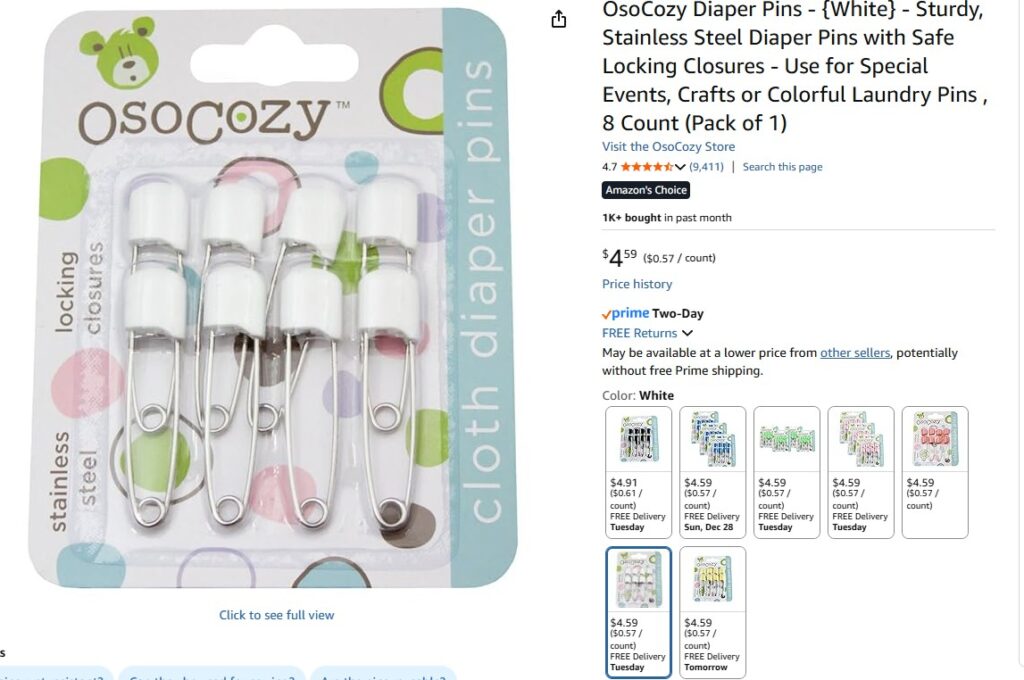
I had this idea that some giant safety pins could be dual-use: pin something to the outside of my pack, like maybe the blood clot packet, an idea I abandoned, and also use a sterilized pin to burst a blister. Didn’t get any blisters. I linked four together and brought them along as a contingency fastener, and they were not needed. Who knew?
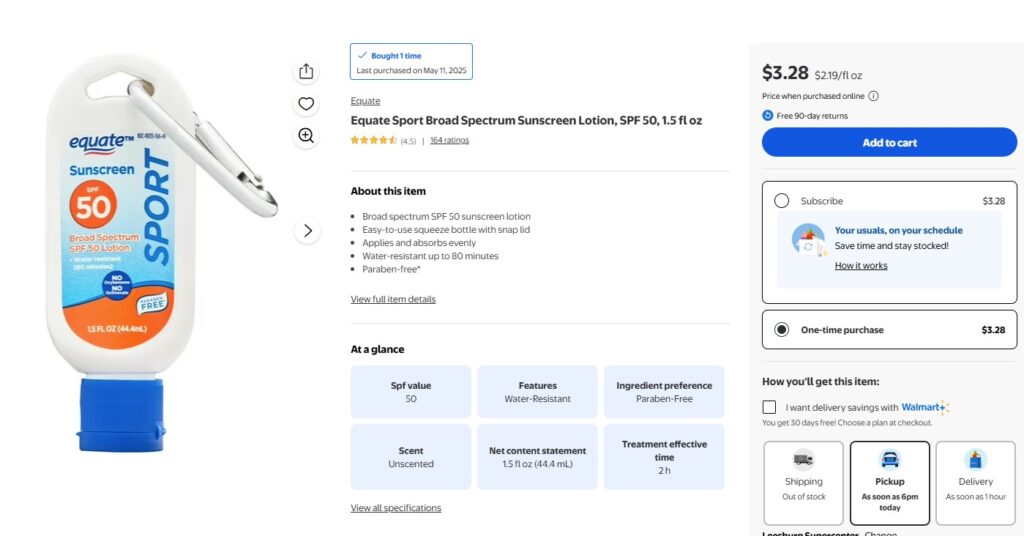
Planning to add sunscreen early and often, I hiked all summer with this little bottle attached to the chest strap of my backpack by a carabiner. I used it a lot on the training hikes and only once or twice in the canyon when the sun was brighter. These 1.5-ounce bottles are relatively expensive, even for this Walmart brand. I refilled the little guy from a big, economical jug. Always a messy, clumsy operation, and yet cost-effective.
More Rambo Survival Gear
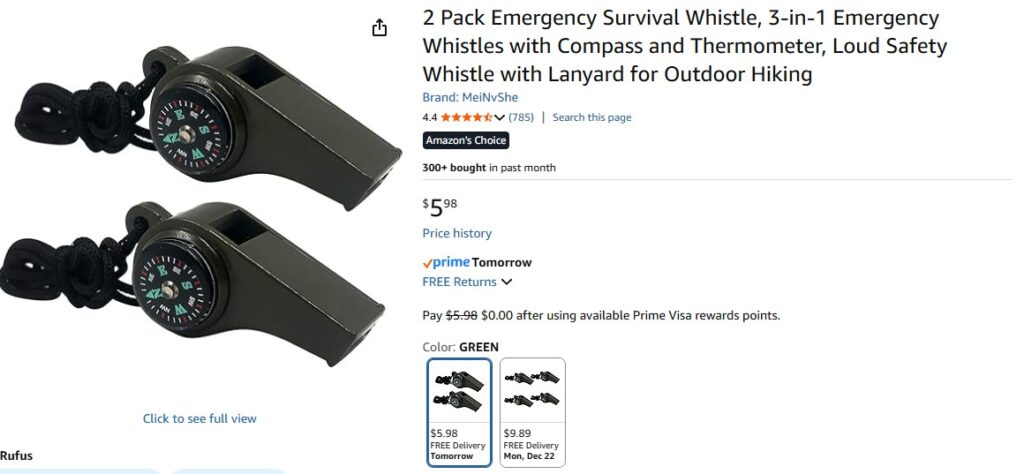
A bargain pack of emergency whistles. Attached one to the knife below and the knife to a lanyard to my backpack for easy reach in an emergency. I always hike with one now. Almost always. I just did a solo hike in the hills, in the cold, and was making a point to move the whistle from my Osprey to my little daypack while sitting warmly in my car beforehand. Returned hours later and opened my car door to see the whistle sitting quietly on the driver’s seat. Ugh. I will do better.

That’s not a knife! (IYKYK, as the young folks say). Always good to have a blade and even tiny scissors, a file, and tweezers on the trail. This little guy is highly recommended by hikers, lightweight (21 grams?), and way more expensive than I thought it would be. And now that I’m home, I cannot find it, and I’m quite irritated. Maybe it was too small after all.
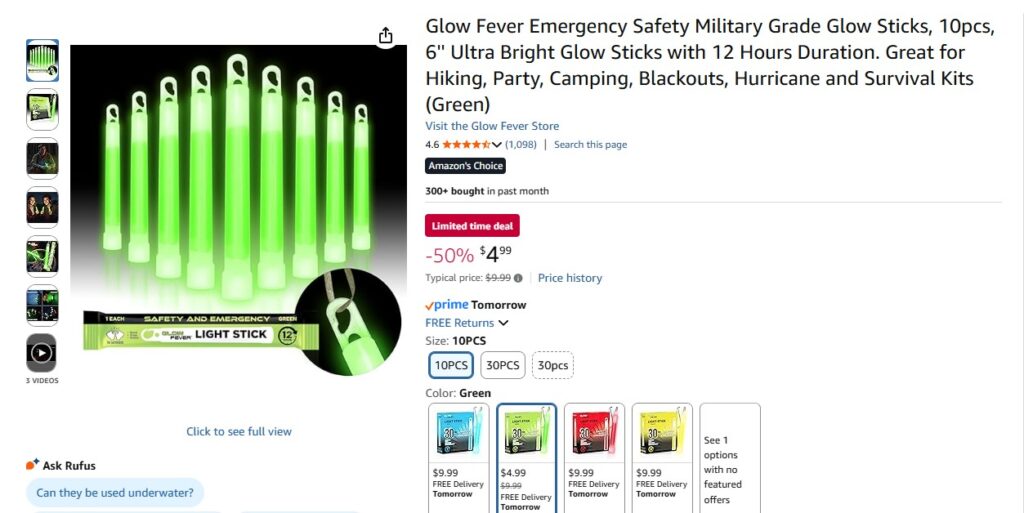
Yes, we had a headlamp and extra batteries, and our phones have a flashlight, and yet it’s reassuring to have a long-lasting light source (or two, or three) had we gotten bogged down for an overnight stay in the canyon. I’ve relied on chem lights since my Army days and brought some into the canyon.
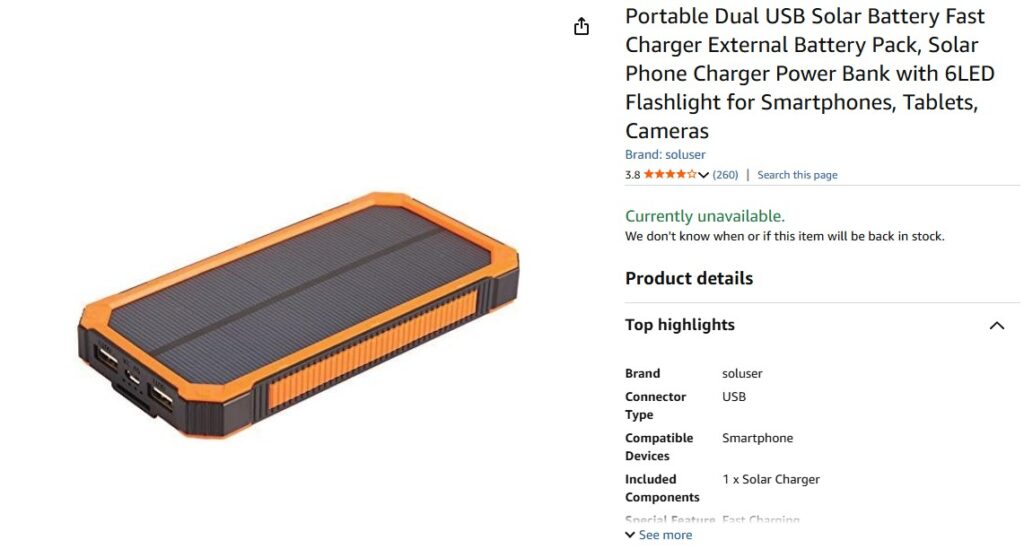
“The most common way people give up their power is by thinking they don’t have any,” – Alice Walker, Pulitzer Prize-winning author of The Color Purple.
Not what she meant, but I wanted power in the canyon and never be in a position where I didn’t have any. I’ve owned these solar-charging power banks for years and had one secured to the outside of my backpack the entire hike, hopefully charging. It weighs nine ounces, costs $15, and I thought it was worth it. Mike and I each carried a battery pack and cables for our phones, headlamp, AirPods, and watches. The pack dangling from my backpack looked silly. It was never needed. That’s a good thing.
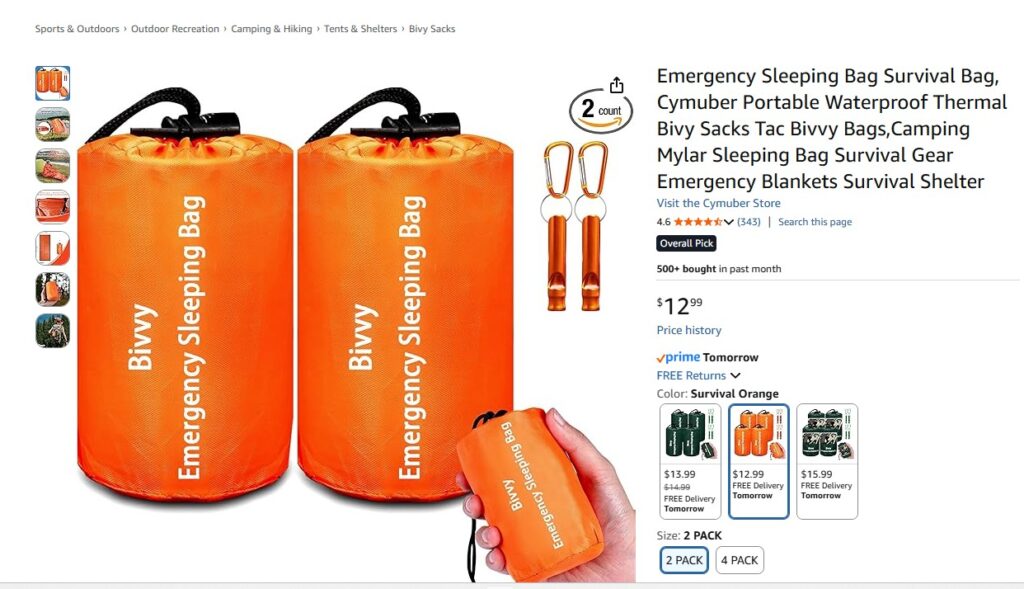
The Bivvy emergency sleeping bag. Mike gave me one when we started hiking together. I have a few survival blanket ones from years ago, but everyone on the web swears by these, so I welcomed the gift. Knowing I had this in my pack meant I could ditch earlier plans to bring matches and a candle (a combo that warmed me up from hypothermia once!). Very lightweight. Always in my pack now.
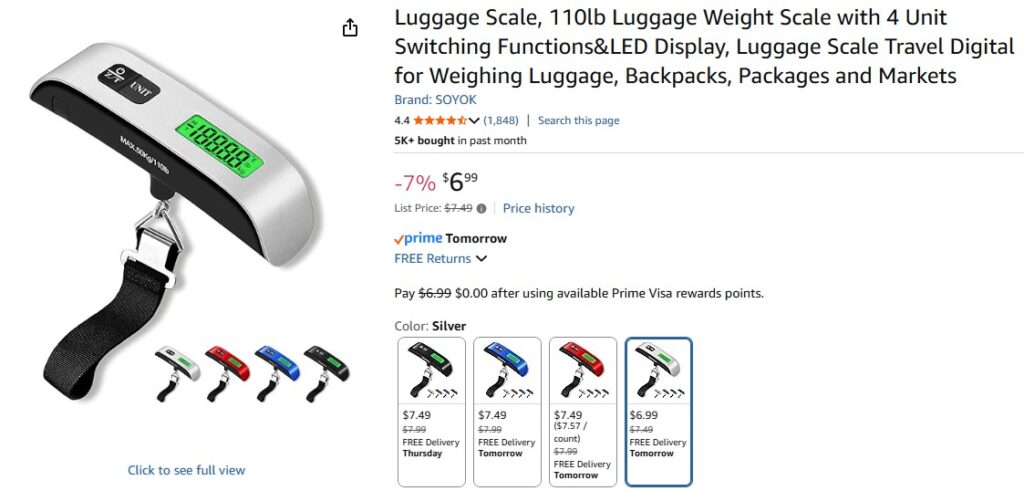
The telltale luggage scale. Used it all summer, weighing my training packs, and still went into the canyon a few pounds heavier than I wanted to be. The pack. Not me. Well, me too, but the scale only goes to 110 lbs.
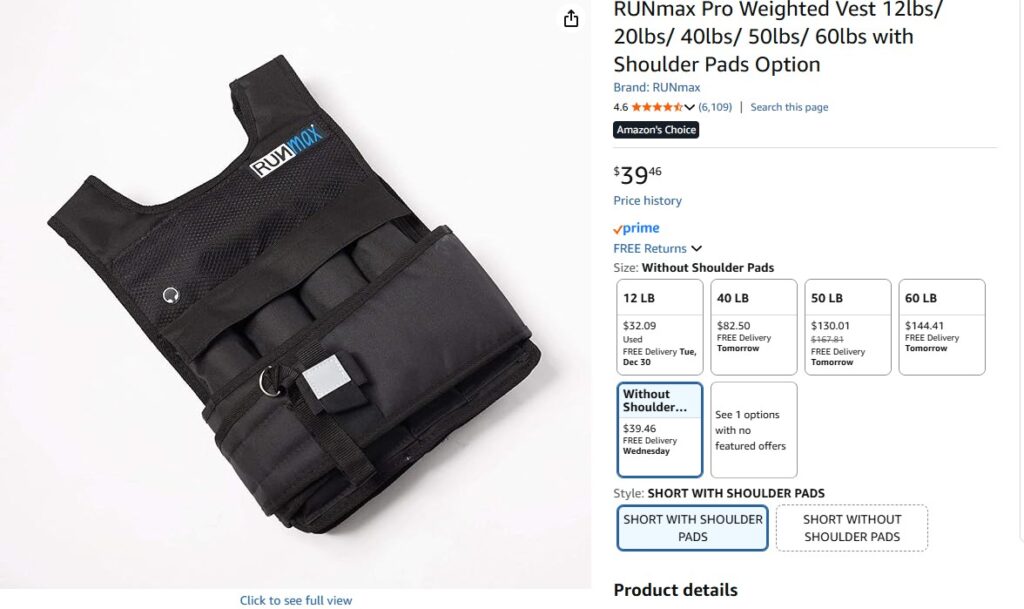
Speaking of heavy stuff, this is the weighted vest I mentioned in the training section. A bargain at $40. The five-pound weights are removable, but I always walked with the full 20 pounds. I believe the vest helped turn short walks into more productive workouts and will use it again, I’m sure. I didn’t buy the shoulder pads – wish I had. Hikes over an hour made my shoulders ache more than they should have.
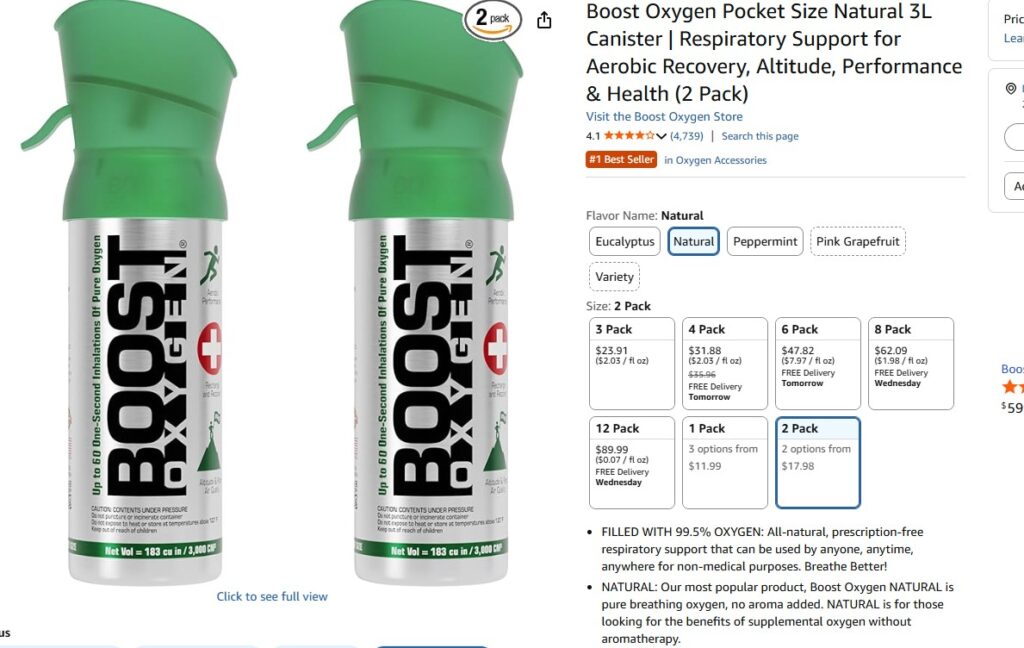
Oxygen in a can. I wondered if one would be useful if the altitude became an issue, or if I worked so hard climbing out of the canyon that I couldn’t catch my breath. These little guys – the 3L ones I bought are less than four ounces and maybe five inches tall – were a cheap insurance policy. A can fit nicely in the Osprey pouch on the left shoulder strap, so I took it with me. For the hell of it, I took a hit on Bright Angel and felt nothing at all. Maybe if I were more gassed? I bought “Natural”. They also come in eucalyptus, pink grapefruit, and peppermint. I cannot imagine inhaling flavored air.
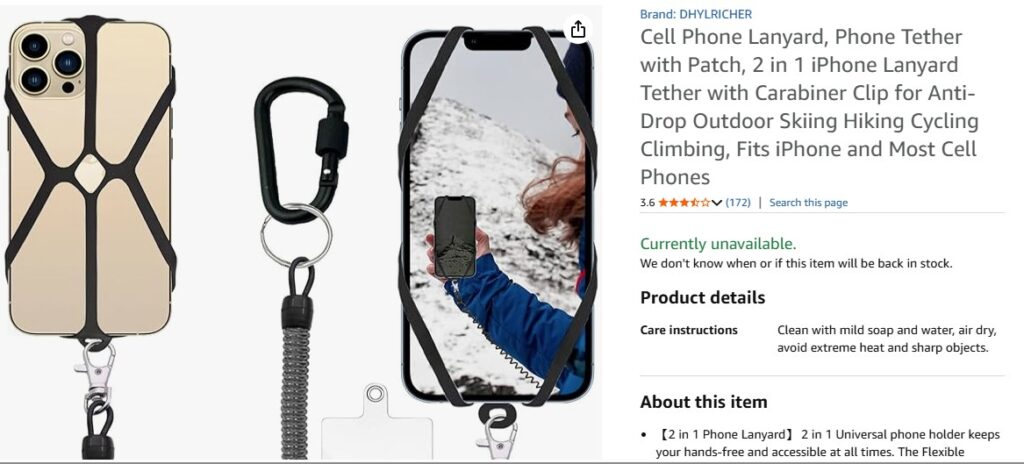
The phone lanyard. My logic was that, with all the picture-taking, I didn’t want to fumble my phone over the canyon walls when I was tired and clumsy. Admittedly, I did not practice this, and maybe I should have. If I had hiked in convertible pants with a belt, I could have attached the D-ring to that. My shorts had no belt, and I had to attach the lanyard to my Osprey pack strap while keeping my phone in my shorts pocket. Huge pain in the ass having to uncouple the D-ring every time I took off the backpack. I later learned Mike found it hard to watch at every break. I liked the idea of securing my phone. Probably a better way if I do this again.
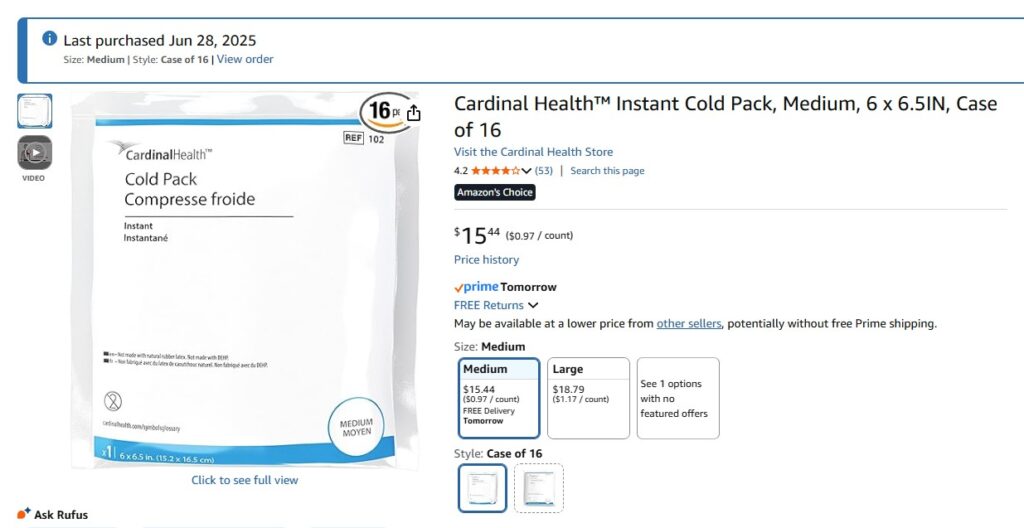
Instant cold packs. Another flop. I had this idea that having an instant cold pack might bring some relief, not for injury, but to squeeze it all cold and put it in my hat when the sun started baking my head. Many years ago, I ran in 100-degree heat and slipped a baggie of ice under my hat at the start. Cooled my head, and when the ice melted, I’d pour the cold water on my hair. Quite a relief. I bought these cheap instant packs – about a buck each – and on my first training hike knew they were a dud. Each pack was strikingly heavy, and when activated, lasted for maybe a minute of cold. Not as advertised. I complained to Amazon, and not only did they refund my money, but they also said I didn’t have to send them back! Now I have 15 unused packs in my garage. Oh yeah, the value of a training hike – I didn’t bring one into the canyon. Learned my lesson.
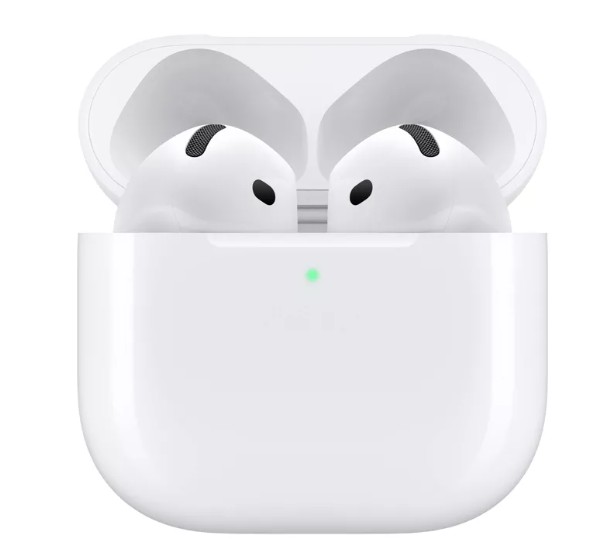

My final piece of gear, appropriately listed under emergency survival stuff. On every hike, we brought our AirPods, thinking that if we ran into a really tough mental spot, we could put them in and listen to some motivational or distracting tunes on our phones. Music has gotten me through some long, long runs, and these Apple AirPods stay snugly in my ears for hours. Mike and I are music nuts. Chalk it up to friendship, how entertaining we are or how low the entertainment bar might be, but not once in maybe a hundred miles of hiking have we needed to put them in. We talk for hours….about deeply personal things and the most inane and embarrassing stuff. Family, music, books, movies, travel, politics, our former careers, inappropriate jokes and stories so funny that we are offended to tell, but we do. Silence is rare. Usually, because we are winded heading uphill, not because we are out of material. The running joke is to say something stupid at the beginning of a hike and draw out the threat of AirPods. A hollow threat. We don’t even bring them anymore.
Finally…..
In fact, I don’t wear AirPods when I hike alone, even for hours on end. And most of the gear above is stored in a bin in my garage, with only a few essentials now in my small day pack. I’ve come to enjoy being in the woods, in my own head, thriving with my new hobby. I used to be a runner. Now I’m a hiker. Planning our next adventure.